 Claude
 Perplexity
TL;DR
- Desert dust, near-constant AC use, and coastal humidity affect dining chairs, headboards, and office furniture differently. Generic sofa cleaning advice does not account for these differences.
- Dining chairs, headboards, and office seating each carry distinct staining, fabric, and hygiene risks that call for different care routines.
- Surface dust and light spot stains can often be managed at home, while embedded stains, extensive soiling, or deterioration that cannot be safely treated with routine care may require professional attention.
- Building a furniture-specific cleaning calendar, rather than a one-size-fits-all approach, is the most reliable way to extend the life of upholstered pieces in a Dubai home or office.
Most conversations about upholstery cleaning in Dubai centre on one piece of furniture: the living room sofa. But dining chairs, bed headboards, and office chairs face different types of exposure and often go without the same attention. Dining chairs absorb food and drink spills every day. Skin, hair, and body oils transfer onto headboards each night. Shared office chairs and reception seating may be used by multiple people across a working week.
Dubai's environment adds layers that generic upholstery advice may not cover. Desert dust penetrates fabric weave through open windows, balconies, and building entrances. Frequent air conditioning lowers indoor humidity, which can contribute to moisture loss in some leather finishes. Homes in coastal areas such as Dubai Marina and JBR experience higher humidity, which can slow the drying of upholstery after wet cleaning and raise the risk of musty odours if fabric and padding remain damp for too long.
This guide covers the three furniture types separately: the material concerns, common staining patterns, and practical care methods for each in a Dubai home or office.
Also read
Why Dubai's Climate Changes the Upholstery Cleaning Equation
Many general upholstery cleaning instructions are written for environments with different levels of humidity and dust than Dubai. The local conditions affect how upholstery materials respond to both everyday use and cleaning.
Fine desert dust settles into upholstery fibres, particularly around seams, tufting, and piping, where it resists removal from a standard vacuum pass. Over weeks without targeted cleaning, embedded dust alters the texture and appearance of fabric surfaces in ways that become progressively harder to reverse.
Air conditioning's effect on upholstery is less widely recognised. Prolonged exposure to the dry, conditioned air common in Dubai apartments can contribute to moisture loss in some leather finishes, potentially leading to stiffness or cracking over time, particularly on frequently handled areas such as headboards and office chairs. On the other side, waterfront properties in Dubai Marina and JBR can experience higher ambient humidity, which slows drying after wet cleaning and raises the risk of mildew developing within padding if upholstery is not dried thoroughly.
Dining Chair Upholstery: Daily Wear in a High-Traffic Zone
Dining chairs face more frequent and more varied staining than almost any other upholstered furniture in a home. Meals, gatherings, children, and daily use funnel through the same set of seats.
Common Stain and Wear Patterns
Food and beverage stains are the primary concern, and they fall into two categories that require different treatment approaches. Oil-based stains from ghee, sauces, and similar foods respond differently to cleaning than tannin-based stains from tea, coffee, and juice. Using the same method across both categories does not reliably work for either.
Dirt accumulates in seams and along piping, building faster if spills or crumbs are not cleaned up promptly. As accumulation increases, it can contribute to unpleasant odours, particularly when combined with moisture and limited ventilation. Repeated daily use also causes visible wear along the front seat edge and other high-contact areas over time.
A Practical At-Home Routine
Weekly vacuuming with an upholstery attachment removes loose crumbs and surface dust before they embed into fabric. Pay particular attention to seams and the underside of seat cushions, where debris collects but is less visible.
When a spill happens, blot rather than rub. Rubbing pushes liquid deeper into fibres and spreads the stain. A clean cloth with gentle pressure, repeated using clean sections of cloth, is more effective than a single vigorous wipe.
Always check the manufacturer's care label before applying any cleaning solution. Fabric coded for water-based cleaning will not respond the same way to a solvent-based product. Using the wrong cleaner can cause discolouration or permanent water rings that are harder to address than the original stain.
When Dining Chairs Need Professional Attention
Stains that have set for more than a day or two, particularly oil-based ones, are difficult to fully remove with home methods. Professional upholstery cleaning uses targeted extraction equipment that reaches embedded residue without oversaturating cushion filling, something a household cloth and vacuum cannot replicate.
Chairs used for large family gatherings, Eid celebrations, or regular hosting accumulate a wider mix of stains in a shorter period. For heavily used dining chairs, a seasonal professional clean sits alongside routine home care rather than replacing it.
Headboard Upholstery: A Fabric Surface That Meets Skin Every Night
Upholstered headboards are increasingly common in Dubai apartments and villas, particularly in tufted linen, velvet, and leather finishes. Unlike dining chairs or sofas, a headboard sits in direct, extended contact with hair, skin, and any products applied before bed.
What Makes Headboards Different
Body oils, hair products, and skin cells transfer onto fabric with every night's use. This builds gradually in a way that is not always visible until fabric begins to look dull or discoloured near head height.
Leather and faux leather headboards face a specific risk from Dubai's dry, air-conditioned environment. Prolonged exposure to low-humidity conditions and unsuitable cleaning products can contribute to stiffness or cracking over time, particularly on frequently contacted areas. This matters more for headboards than for furniture that is handled less frequently.
Tufted and buttoned headboard designs, common in Dubai's mid-range and premium furniture, create deep crevices that trap dust more effectively than a flat fabric surface. These crevices are also the hardest areas to reach with a standard vacuum attachment.
DIY Maintenance Between Deep Cleans
For fabric headboards, a gentle weekly vacuum with a soft brush attachment removes surface dust before it settles further into weave. Working in one direction, rather than back and forth, reduces the risk of pushing dust deeper into tufted areas.
For genuine leather headboards, a slightly damp microfibre cloth is suitable for routine wiping, followed by a compatible leather conditioner where the manufacturer recommends it. Faux leather should be cleaned according to its specific care instructions, as some finishes react poorly to products designed for genuine leather. When testing any product, apply it first to a small, hidden area before using it across the full surface.
Headboards positioned near west-facing windows, common in many Dubai bedrooms, can fade or dry out faster on whichever side receives direct afternoon sun. This is worth monitoring as part of a longer-term care approach.
Signs a Headboard Needs Professional Cleaning
Visible discolouration near head height that does not respond to a damp cloth typically indicates that buildup has moved past the surface and into fabric fibres. At this stage, wiping tends to move residue around rather than remove it.
Any musty smell from a fabric headboard, particularly in ground-floor villas or coastal apartments, should be addressed promptly. Professional cleaning combined with proper drying reduces the risk of mildew developing within padding. The issue is similar to what can occur with mattresses, covered in more detail in the professional mattress cleaning guide.
Leather headboards showing early stiffness or surface cracking benefit from professional conditioning treatment rather than a generic household leather wipe, since the correct product and approach depends on the specific leather or faux leather type.
Office Furniture Upholstery: Shared Use, Different Hygiene Stakes
Office chairs, meeting room seating, and reception furniture face a different challenge from home upholstery: multiple people using the same pieces across a working week, often without any single person taking ownership of cleaning them.
Why Office Upholstery Wears Differently
Shared seating accumulates a wider range of contact residue than furniture used by a single household. In hot desk and coworking environments, increasingly common across Dubai's Business Bay and Downtown districts, the range of users is broader still, including visitors, clients, and rotating staff.
Fabric office chairs used for extended hours daily wear along seat and lumbar contact points faster than home furniture used more intermittently. This wear pattern is particularly noticeable in mesh-backed and fabric task chairs common in Dubai's corporate offices.
Reception and waiting area sofas face a dynamic similar to hotel or serviced apartment furniture: frequent, short-term use by different people, which leads to more regular surface soiling than home furniture used by a known household.
Maintaining Office Upholstery Between Professional Visits
A weekly vacuum of high-contact seating, focusing on seat cushions and armrests, keeps surface dust and debris from accumulating between scheduled cleans. Facilities teams managing multiple floors often find a fixed weekly schedule easier to maintain than reacting to visible dirt as it appears.
Spot treating stains as soon as they appear, rather than waiting for a scheduled session, prevents marks from setting into fabric. A stain that requires light spot treatment on day one may need far more intensive work after several days.
For offices with steady visitor traffic, a lint roller or handheld vacuum kept at reception allows staff to do quick touch-ups on high-visibility seating between professional cleans.
Business Case for Scheduled Professional Cleaning
Beyond appearance, shared office upholstery accumulates dust, skin oils, and general soiling from frequent use. A scheduled cleaning cycle, whether quarterly or aligned with broader office deep cleaning schedules, keeps maintenance consistent rather than reactive. For offices undergoing full-scope deep cleans, the deep cleaning service guide covers what a comprehensive visit typically involves.
Property managers overseeing serviced apartments, short-term rental units, or corporate housing across areas such as JLT and Dubai Hills face a similar consideration. Upholstery condition affects guest impressions directly, and turnover between occupants creates a natural checkpoint for cleaning.
Common Mistakes to Avoid Across All Three Furniture Types
Over-wetting fabric during spot cleaning. Saturating an area rather than dampening a cloth and blotting pushes moisture into cushion filling, where it dries slowly and can develop odour. This is particularly noticeable in Dubai's more humid coastal areas, where drying times are longer.
Skipping the fabric care label. Applying a water-based cleaner to fabric coded for solvent cleaning, or vice versa, can permanently mark or discolour upholstery that would otherwise have cleaned easily with the correct product.
Ignoring dust buildup in tufting, seams, and crevices. Focusing only on visible surface areas while leaving these zones untouched allows dust to work deeper into weave over time, making it progressively harder to remove without professional extraction equipment.
Using harsh household chemicals on upholstery. Attempting to speed up stain removal with products not designed for upholstery fabric frequently causes more damage to the fabric finish than the original stain would have. This applies particularly to bleach-based or highly alkaline products used on coloured or delicate fabric.
Building a Realistic Cleaning Frequency for Each Furniture Type
- Dining chairs: Weekly vacuuming and prompt spill treatment at home, with professional deep cleaning every four to six months. Larger households or homes that host frequently may benefit from a shorter interval.
- Fabric headboards: Weekly gentle vacuuming at home, with professional cleaning every six to twelve months depending on use and visible soiling.
- Leather and faux leather headboards: Routine manufacturer-approved cleaning and conditioning, with professional treatment when the material shows significant buildup, staining, or early signs of deterioration.
- Office and commercial seating: Weekly vacuuming, prompt spot treatment, and professional cleaning every three to four months for seating in daily multi-person use.
These intervals are starting points. The right frequency depends on the fabric type, the level of use, the proximity to coastal areas or active construction, and the visible condition of each piece.
HomeShine's Approach to Upholstery Cleaning in Dubai
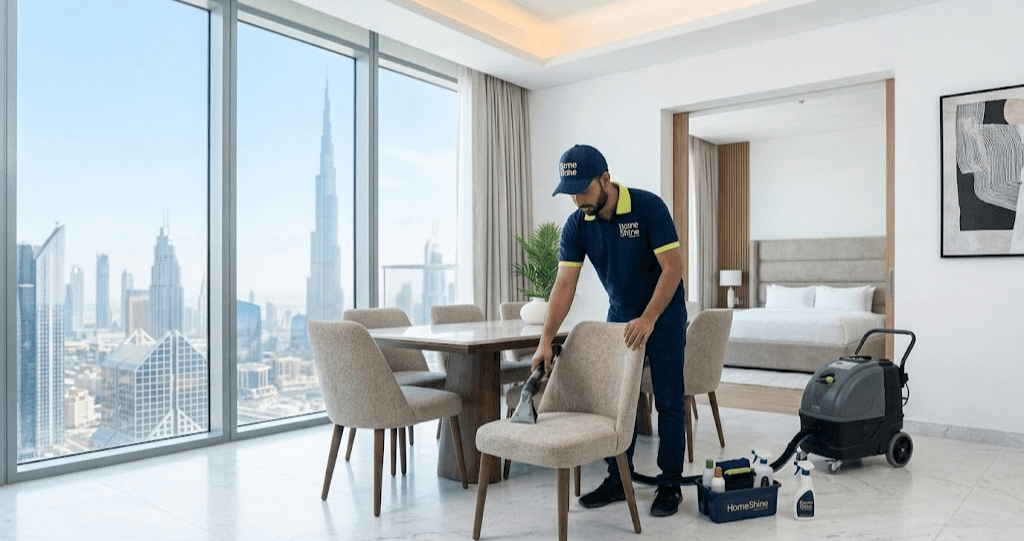
HomeShine technicians do not apply a single cleaning method across dining chairs, headboards, and office furniture. Each visit begins with a fabric and material inspection to determine the most appropriate approach for that specific piece: dry vacuuming, targeted stain treatment, or deep extraction using products matched to the upholstery material and its cleaning requirements.
Service availability and cleaning methods vary depending on the upholstery material, the furniture's condition, and the scope of the job. Pricing and service details are confirmed before work begins, whether the job involves individual pieces or a larger upholstery requirement.
Regular professional cleaning helps maintain the appearance and hygiene of furniture used daily across Dubai Marina, Downtown, Business Bay, JVC, Al Barsha, Dubai Hills, and beyond.
Book upholstery cleaning with HomeShine
Dining chairs, headboards, office furniture. Tell us what needs cleaning and we will match the right method to the material.
Book NowHow often should dining chair upholstery be professionally cleaned in Dubai?
Most households benefit from professional deep cleaning every four to six months, with weekly vacuuming in between. Homes that host frequently or have young children may need a slightly shorter interval given the higher rate of spills and stains.
Can leather headboards be cleaned the same way as fabric headboards?
No. Leather and faux leather headboards need a damp microfibre cloth and periodic conditioning to offset the drying effect of continuous air conditioning, while fabric headboards are better suited to vacuuming and professional extraction methods matched to the specific weave. Using leather cleaning products on fabric, or vice versa, can cause damage.
Is it safe to clean office furniture during working hours?
Yes, in most cases. Professional upholstery cleaning can typically be scheduled after hours or during quieter periods to minimise disruption. Drying time varies depending on the cleaning method, fabric type, ventilation, and indoor humidity level.
Why does Dubai's climate matter for upholstery cleaning specifically?
Fine desert dust can settle into upholstery fibres over time, while persistent air conditioning may affect some sensitive materials. In coastal areas such as Dubai Marina and JBR, higher ambient humidity can also slow drying after wet cleaning, increasing the risk of musty odours if moisture is not fully removed.
What is the biggest mistake people make when cleaning upholstery at home?
Over-wetting fabric during spot cleaning. Saturating a stained area pushes moisture into cushion filling, where it dries slowly and can lead to odour, especially in Dubai's more humid areas. Blotting with a barely damp cloth is consistently safer than applying cleaner directly and scrubbing.
Do office chairs need different cleaning products than home dining chairs?
Not necessarily different products, but a different approach. Office seating sees continuous multi-person contact, so hygiene-focused treatment and a more frequent cleaning cycle of every three to four months is more relevant than for home furniture used by a single household.