
 Claude
 Perplexity
TL;DR
- For Dubai homeowners, tenants, and property managers who want to understand how to clean AC vents and when professional AC vent cleaning is worth booking.
- Dust, humidity, and near-constant AC use in Dubai cause vents to accumulate contaminants faster than in most climates, directly affecting indoor air quality.
- Homeowners can safely clean visible vent grilles and covers themselves, while ductwork and internal AC components should only be cleaned by professionals.
- Neglected vents strain the AC system, raise energy bills, and can trigger allergy and respiratory symptoms.
- A seasonal cleaning routine, paired with an annual professional service, keeps air quality and cooling efficiency consistent through Dubai's long summer.
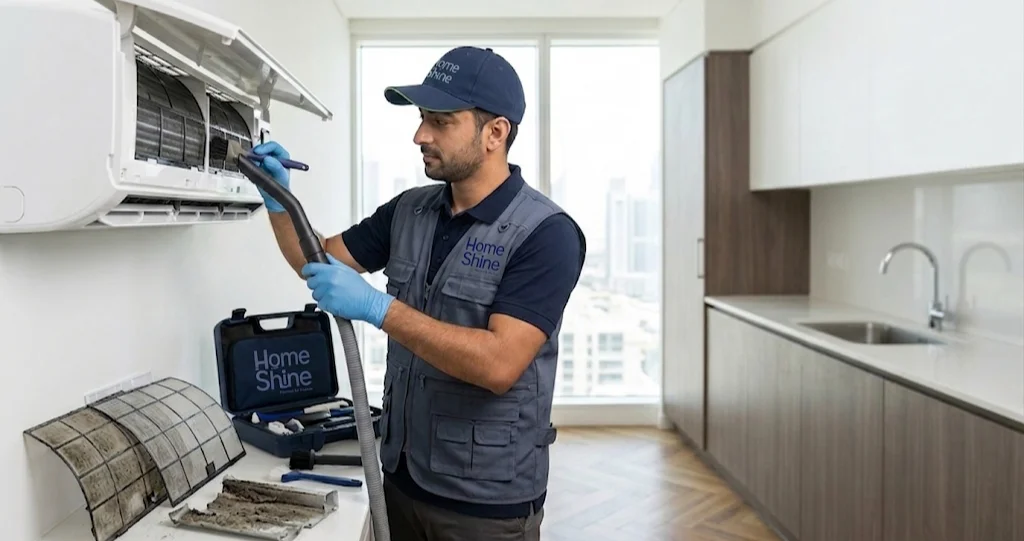
Air conditioning runs almost year-round in Dubai, which means AC vents work harder here than in most parts of the world. Every cubic metre of cooled air passing through a vent carries fine desert dust, skin cells, and airborne particles that settle inside the grille and ductwork over time. Understanding how to clean AC vents, and knowing when a job needs a professional, has become a practical necessity for Dubai homeowners rather than an optional maintenance task.
This guide covers what actually happens inside a dirty AC vent, a safe step-by-step process for cleaning parts homeowners can reach, signs that indicate ductwork needs professional attention, and how regular AC vent cleaning affects both air quality and cooling costs in a Dubai home.
Also read
Why AC Vents Get Dirty Faster in Dubai
Dubai's climate is uniquely hard on air conditioning systems. Understanding why vents accumulate grime quickly explains why cleaning them matters more here than in milder climates.
- Desert dust and sandstorms. Fine sand particles infiltrate homes even with windows closed, and much of it gets pulled into AC intakes and settles inside vents and ductwork.
- Near-continuous AC usage. Most Dubai homes run air conditioning for eight to ten months of the year. Continuous airflow means continuous particle movement through vents, so dust builds up faster than in climates where AC is seasonal.
- High humidity. Coastal humidity combined with cold vent surfaces creates condensation inside ducts and around vent covers. This moisture is what allows mould and mildew to take hold if vents are not cleaned regularly.
- High-rise and villa density. Apartments across Dubai Marina, Business Bay, and Downtown Dubai often share centralised AC systems, while villas in communities like Arabian Ranches or Dubai Hills typically run split or ducted systems per unit. Either way, dust circulates through shared or extended ductwork, compounding buildup.
Together, these factors mean a Dubai home's vents can gather far more debris in a single season than a vent in a milder, drier, less AC-dependent city would accumulate in a full year.
What's Actually Building Up Inside Your Vents
A vent that looks only slightly dusty on the surface often hides a lot more. Common buildup includes:
- Fine desert sand and dust
- Human and pet skin cells and hair
- Pollen and outdoor allergens
- Mould spores, particularly in humid months
- Bacteria that thrive in the moist, dark environment of ductwork
- Lint and fabric fibres from furnishings and clothing
None of this is unusual; every home accumulates it. The concern is what happens when it is not cleaned. Every time the AC runs, some of this material gets pushed back into the room, which is why vent cleanliness is directly tied to indoor air quality.
How Dirty Vents Affect Indoor Air Quality and Health
The connection between AC vents and the air people breathe is direct. Air passes through the vents every time the system runs, so anything trapped inside becomes part of the air circulating throughout the home.
Allergy and respiratory symptoms. Residents with dust allergies, asthma, or general sensitivity often notice more sneezing, congestion, or irritation when vents have not been cleaned in a while. This is especially relevant for young children and elderly family members, who are more sensitive to airborne particles.
Odour buildup. Musty or stale smells when the AC switches on are usually a sign of moisture and organic buildup inside the vent or duct, not a fault with the unit itself.
Reduced airflow. A vent partially blocked by dust does not distribute air as effectively, which means some rooms cool unevenly while the system works harder to compensate.
Higher energy consumption. When airflow is restricted, the AC compressor and fan need to work longer to reach the set temperature, which can show up as a higher DEWA bill over time.
Regular AC vent cleaning addresses all four issues at once, which is why it is treated as a health and efficiency measure rather than a cosmetic one.
DIY AC Vent Cleaning: A Step-by-Step Guide
Homeowners can safely clean visible parts of most vents: covers, grilles, and the immediate surface area, without professional help. This will not reach mould or dust deep inside ductwork, but it makes a noticeable difference and keeps the system running cleaner day to day.
What You'll Need
- A screwdriver (if the vent cover is fixed with screws)
- A vacuum cleaner with a brush or crevice attachment
- A soft-bristled brush
- A microfiber cloth
- Warm water with a small amount of mild dish soap
- A dust mask, especially useful during or after sandstorm season
Step 1: Turn Off the AC
Switch off the unit at the thermostat before starting. This prevents dust from being blown into the room mid-clean and keeps loose debris from being pulled back into ductwork.
Step 2: Remove the Vent Cover
Most Dubai apartments and villas use vent covers that either clip or unclip by hand, or are secured with screws. Set any screws aside somewhere they will not get lost.
Step 3: Vacuum Loose Dust First
Run the brush attachment over the cover and immediate opening to lift loose dust before introducing any water. Going straight to washing tends to turn dry dust into a paste that is harder to remove.
Step 4: Wash the Cover
Soak it in warm, soapy water for ten to fifteen minutes, then scrub gently with a soft brush to loosen grime from the slats. Rinse thoroughly and let it air dry completely before reattaching. A damp cover can encourage mould growth.
Step 5: Wipe Down the Visible Duct Opening
While the cover dries, use a damp microfiber cloth to wipe the interior edge of the vent opening as far as your hand can safely reach. Do not use tools to reach further into ductwork, as this can damage internal components or dislodge debris deeper into the system.
Step 6: Reattach and Test
Once the cover is completely dry, reattach it securely and switch the AC back on. Let it run for a few minutes and check for even airflow and any unusual sounds.
This process is worth repeating every four to six weeks in Dubai, particularly during sandstorm season, to keep visible dust from accumulating between professional cleanings.
Common Mistakes to Avoid
- Cleaning while the AC is running. This pushes loose dust further into ductwork instead of removing it.
- Reattaching a wet vent cover. Trapped moisture is one of the main causes of mould growth inside vents.
- Using harsh chemical cleaners. Strong solvents can damage vent materials and leave residue that affects air quality. Mild soap and water is sufficient for most buildup.
- Trying to clean deep ductwork yourself. Household tools and standard vacuums cannot reach or effectively clean duct interiors, and improper attempts can damage the system.
- Ignoring the AC filter. A dirty filter recontaminates a freshly cleaned vent within days. Filters should be checked or replaced alongside any vent cleaning.
When to Call a Professional
DIY cleaning handles surface-level dust, but several situations call for professional AC cleaning in Dubai:
- Persistent musty odour that does not improve after cleaning visible covers
- Visible mould around the vent opening or on the cover itself
- A noticeable spike in allergy symptoms indoors
- No professional cleaning in the past 12 months
- Moving into a new home or apartment, where AC history is unknown
- Preparing a property for new tenants or Airbnb guests, where air quality directly affects reviews and satisfaction
Professional technicians use specialised equipment to clean inside ductwork, not just the visible grille, and can access split AC coils and internal components that are not safe for homeowners to open. HomeShine's AC vent cleaning technicians are background-verified and use eco-friendly cleaning products that are safe around children and pets, with transparent pricing confirmed before the job begins.
How Often Should AC Vents Be Cleaned in Dubai?
Given Dubai's climate, most homes benefit from:
- Visible vent and cover cleaning: every 4 to 6 weeks, done independently
- Professional deep cleaning: at least once a year, or every six months in homes with pets, allergy sufferers, or heavy dust exposure
- Filter checks: monthly, with replacement as needed
Villas with larger duct networks and apartments in older buildings across areas like Al Barsha or Jumeirah Lake Towers may need slightly more frequent professional attention, since ductwork tends to accumulate more debris over time regardless of how well visible vents are maintained.
Clean AC vents are one of the simplest ways to improve indoor air quality in a Dubai home, and they play a direct role in how efficiently the AC system runs through the year. Homeowners can manage routine surface cleaning themselves, but ductwork and internal components need professional tools and expertise to clean safely and thoroughly.
Book AC vent cleaning in Dubai
HomeShine provides professional AC vent cleaning across Dubai with background-verified technicians, eco-friendly products, and same-day availability.
Book nowFrequently Asked Questions
How do I know if my AC vents need cleaning?
Common signs include visible dust around the vent cover, a musty smell when the AC starts, weaker airflow than usual, or an unexplained rise in allergy symptoms at home. If it has been over a year since the last professional cleaning, it is a good time to book one regardless of visible signs.
Can I clean AC vents myself, or do I need a professional?
You can safely clean visible vent covers and the immediate opening yourself using a vacuum, soft brush, and mild soapy water. However, cleaning inside ductwork or accessing split AC coils requires professional equipment and should not be attempted with household tools.
How often should AC vent cleaning be done in Dubai?
Visible vent covers can be cleaned every four to six weeks, especially after dust storms. Professional AC vent cleaning is recommended at least once a year, or every six months for homes with pets or allergy-prone residents.
Does AC vent cleaning actually lower electricity bills?
Clean vents allow air to flow more freely, which reduces strain on the compressor and fan. This does not guarantee a specific reduction in cost, but improved airflow generally supports more efficient cooling and can ease pressure on DEWA bills over time.
Is AC vent cleaning safe for homes with children and pets?
Yes, when done with non-toxic, eco-friendly products. HomeShine's technicians use cleaning solutions that are safe for children and pets while still being effective against dust, allergens, and mould.
What's the difference between AC vent cleaning and AC duct cleaning?
AC vent cleaning refers to the visible grille and immediate opening in each room. AC duct cleaning covers the full network of ductwork connecting vents to AC units, which requires professional tools to access and clean properly.