 Claude
 Perplexity
TL;DR
- For Dubai homeowners, villa owners, and property managers who want to understand what a carpet cleaning machine actually does before booking a service.
- Many machines use a spray, agitation, and extraction process, but encapsulation and dry-compound systems work differently and use far less water.
- Different machines suit different situations, from portable extractors for a single apartment rug to truck-mounted systems for a full villa.
- Dubai's fine desert dust, near-constant AC use, and coastal humidity mean the choice of machine and method matters more here than in most cities.
- Understanding how these machines work helps you judge whether a DIY rental or a professional service is better for your carpet.
The basic components of carpet cleaning machines can look similar: a brush or cleaning head, vacuum motor, hose or wand, and one or more tanks. What happens inside the machine, however, determines whether a carpet is genuinely cleaned or simply looks clean for a short time. If you have a home in Dubai, you may notice that fine dust and sand accumulate in carpets quickly. Understanding the different types of carpet cleaning machines can help you choose the right method for your home.
This guide explains how these machines work, the various types available for home or professional use, and where each type is most suitable.
Also Read
How a carpet cleaning machine actually works
For many carpet extraction machines, the cleaning process involves three main stages: applying the cleaning solution, agitating the carpet fibres to loosen dirt, and extracting the resulting moisture and soil. The machine sprays a combination of water and detergent onto the pile, which loosens dirt, dust, and stains that have become embedded in the fibres.
A rotating brush, or a group of counter-rotating brushes, then physically dislodges particles embedded in the carpet. This step is more significant than it might appear. Vacuuming removes only loose surface dirt and will not remove dirt attached to fibres or settled at the bottom of the pile. The agitation stage moves that soil away from the fibre so the cleaning solution can reach it.
After the solution and loosened soil have been allowed to dwell, a high-powered vacuum pulls the mixture into a separate holding tank inside the machine. This extraction step removes most of the moisture introduced during cleaning and prevents excess water from sitting in the carpet and padding. A well-calibrated professional machine leaves the carpet significantly drier than a rental unit does, because it generates more suction per pass. You can read more about what cleaning carpet at home involves if you are weighing DIY versus professional options.
Some machines incorporate a heating element to warm the water before spraying. Heated water can improve the removal of oils and greasy soils, and sufficiently high temperatures may reduce certain microorganisms and dust mites. That is why hot water extraction is often marketed as "steam cleaning." The term can be misleading, however, because most carpet-cleaning systems use heated water combined with cleaning solution, agitation, and vacuum extraction rather than dry vapour steam. The Carpet and Rug Institute provides guidance on cleaning standards and approved methods for different carpet types.
Types of carpet cleaning machines
Not every carpet cleaning machine is built the same way. Differences affect both the depth of clean and how long a carpet takes to dry afterward.
Upright and portable extractors
These are the machines most people picture when they think of carpet cleaning. Compact upright extractors are common for household use or smaller apartments, while portable units give professionals the flexibility to move between rooms without hauling a full-size machine. They typically combine a spray nozzle, a brush head, and a built-in vacuum in one unit, and they are practical for single rooms, area rugs, or apartments where maneuvering a bulkier machine is impractical.
Walk-behind machines
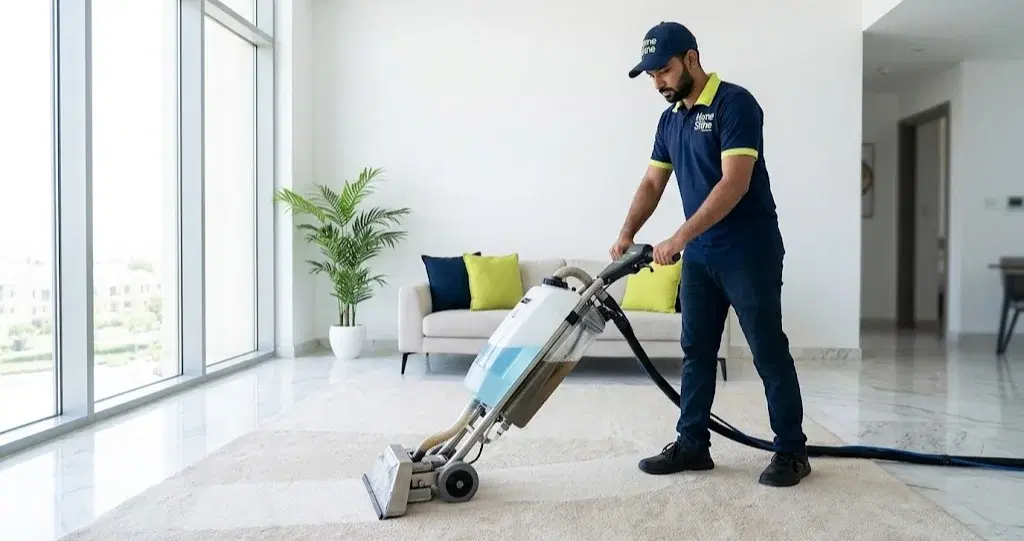
Walk-behind carpet extractors resemble a heavy-duty vacuum cleaner and are designed for covering larger areas efficiently. They offer a wider cleaning path than handheld wands, which makes them a better fit for open-plan living rooms or villas with extensive carpeted flooring. Because they cover more ground per pass, they also tend to finish a job faster than wand-based equipment.
Truck-mounted systems
Truck-mounted extractors keep the water tanks, heating unit, and vacuum motor inside a vehicle parked outside the property, with only the hose and wand brought indoors. This setup allows for significantly more heat, pressure, and suction than a portable machine can generate, since the equipment is not limited by what a small unit can carry or power indoors. Truck-mounted systems can provide high levels of vacuum performance, heat, and solution delivery, making them well suited to large properties and heavily soiled carpets when access and setup allow.
Encapsulation and counter-rotating brush machines
Encapsulation cleaning uses a low-moisture cleaning solution that surrounds and encapsulates soil as it dries. Counter-rotating brush equipment works the solution into the carpet fibres, after which the dried residue is removed by vacuuming in a follow-up pass. Because this method uses far less water than extraction, carpets generally dry much faster, although actual drying time depends on the carpet, humidity, airflow, application rate, and the amount of moisture used. It works well as an interim clean but generally does not reach as deep into the pile as hot water extraction does.
Hot water extraction vs. encapsulation vs. dry cleaning
Choosing between these methods comes down to how dirty the carpet is, what it is made of, and how much drying time is available.
Hot water extraction is widely used for carpets that need deeper soil removal. The combination of cleaning solution, agitation, and strong extraction can remove embedded soil effectively. The trade-off is drying time, which can range from several hours up to a full day depending on ventilation and humidity.
Encapsulation is a faster, lower-moisture alternative. It suits routine maintenance and lightly soiled carpets well, but it is not usually recommended as the sole method for carpets that have not had a deep clean in some time.
Dry compound cleaning, sometimes called dry extraction, spreads an absorbent cleaning compound across the carpet, works it in mechanically, then vacuums it away. This leaves almost no residual moisture and is often used in spaces that cannot tolerate downtime, such as offices or commercial areas that need to stay in use. Bonnet cleaning uses a rotating absorbent pad to remove mainly surface-level soil. It can be useful for interim maintenance in some commercial settings, but is generally less suitable than deep extraction when a carpet requires thorough soil removal.
Where these machines are used
Carpet cleaning machines show up across a wide range of settings, and the type of machine used often reflects the scale of the space. Homes and apartments typically see portable extractors or walk-behind machines, since these are practical for room-by-room cleaning without requiring heavy equipment to be hauled indoors. Villas with larger carpeted areas often call for either a more powerful walk-behind unit or a truck-mounted system, particularly when several rooms need attention in a single visit.
Hotels, offices, and commercial spaces frequently lean toward encapsulation or dry compound methods, since these allow carpeted areas to be reopened for use much sooner than hot water extraction permits. Facilities with heavy foot traffic, such as lobbies or conference rooms, benefit from the fast turnaround these low-moisture methods offer, even when they are paired with periodic deep extraction cleans to reach the level of soil that daily foot traffic leaves behind. Some professional extraction machines also have attachments for cleaning upholstery and other fabric surfaces, allowing the same equipment platform to be used beyond just carpets.
Why this matters more in Dubai homes
Dubai's desert environment means homes can be exposed to fine dust and sand particles that enter indoor spaces and settle on floors and carpets. Over time, these particles work their way into carpet fibres and become abrasive under foot traffic, contributing to a dull or matted appearance. You can read more about how Dubai dust affects soft furnishings and why standard vacuuming often falls short.
Most Dubai apartments and villas run centralised air conditioning for most of the year. HVAC systems can recirculate airborne particles indoors, particularly when filters are not properly maintained, and carpet ends up acting as an unintentional filter for everything the AC does not trap. Fine sand sits deep in the base of the pile, well below where a standard vacuum can reach.
Coastal humidity in areas like Dubai Marina and JBR adds another layer of consideration. Carpets in these communities can hold onto moisture longer after a wet cleaning method, which makes proper extraction and adequate airflow during drying especially important to avoid a musty smell or mildew developing in the padding.
Because of these conditions, hot water extraction can be a useful choice for Dubai homes when carpets need deeper soil removal. Encapsulation and dry methods still have a place for lighter touch-ups between deeper cleans, particularly in homes with less foot traffic or for short-term rental units that need a quick turnaround between guests. For a full view of carpet cleaning services across Dubai, including per-room pricing, see our main service page.
DIY rental vs. professional cleaning
Rental carpet cleaning machines are widely available and can be a reasonable option for small stains or a single rug. Where they tend to fall short is extraction power. Rental machines may have less suction capacity than professional-grade systems, which means less moisture and dirt is removed per pass. If insufficient moisture is extracted, DIY cleaning can leave excess water and suspended soil behind, which may contribute to a carpet feeling dirty again quickly, or developing an unpleasant smell as dirty solution remains trapped in the padding.
A DIY machine can be worth using for light maintenance between professional cleans, especially for a small area rug or a single room. For full apartments, villas, or carpets that have not been deep cleaned in six months or more, the extraction power of professional equipment, combined with correct dilution ratios and proper drying technique, generally produces a meaningfully better result.
Professional technicians also bring judgment that a rental machine cannot replicate. Wool and natural fibre carpets, common in higher-end Dubai villas, can be damaged by excessive heat or the wrong solution. Knowing which method and temperature suit a specific carpet type is part of what separates a professional clean from a DIY attempt.
Common mistakes to avoid
- Oversaturating the carpet. Applying too much solution without adequate extraction leaves excess moisture in the padding, which extends drying time and increases the risk of mould, particularly in Dubai's humid coastal areas.
- Skipping a final extraction pass. Where the machine allows it, a final pass without additional cleaning solution can remove more residual moisture and help the carpet dry faster.
- Using the wrong method for a delicate carpet. Wool, silk, and other natural fibres can shrink, curl, or lose colour under high heat or harsh chemicals, so identifying the carpet material before choosing a method matters.
- Relying on vacuuming alone for too long. In Dubai's climate, fine dust and allergen buildup in the base of the pile happens faster than most homeowners expect. Regular vacuuming cannot reach the debris that settles at the fibre base.
How often Dubai carpets need a deep clean
A deep carpet clean every three to six months can be a useful starting point for many households, but the right frequency depends on foot traffic, pets, children, indoor conditions, carpet type, and manufacturer recommendations. Between deep cleans, regular vacuuming and prompt spot treatment of spills reduce how hard the machine has to work during the next session and help prevent staining from setting in. For Airbnb hosts and property managers, aligning a deep clean with guest turnover schedules or seasonal maintenance windows keeps carpets consistently presentable without disrupting bookings.
Professional carpet cleaning across Dubai
HomeShine technicians bring the right equipment and method for every carpet type, from apartments in Dubai Marina to villas across the city.
Book your carpet cleaningWhat is the difference between steam cleaning and hot water extraction?
They refer to the same process. Hot water extraction is sometimes marketed as steam cleaning, but the actual cleaning happens through heated water sprayed under pressure and then extracted, not through dry vapour steam.
How long does it take for a carpet to dry after professional cleaning?
Drying time depends on the method and the home's ventilation. Hot water extraction typically takes several hours up to a full day, while encapsulation and dry compound methods can dry in under an hour. In humid areas of Dubai, good airflow helps speed this up considerably.
Can carpet cleaning machines damage my carpet?
Used incorrectly, yes. Excessive heat or the wrong solution can affect wool or other natural fibres, which is why identifying the carpet material before choosing a method matters. Professional-grade machines with adjustable settings reduce this risk significantly.
Is a rental carpet cleaning machine good enough for a Dubai apartment?
Rental machines can help with light maintenance or small stains, but they generally extract less moisture and dirt than professional equipment. For carpets exposed to Dubai's desert dust over several months, a professional deep clean usually reaches further into the pile.
How often should carpets be professionally cleaned in Dubai?
For many households, a professional deep clean every three to six months can be a practical starting point, although the right frequency depends on foot traffic, pets, children, indoor conditions, carpet type, and manufacturer recommendations.
Why does Dubai dust affect carpets more than dust in other cities?
Dubai's desert environment exposes homes to fine dust and sand particles that can settle into carpet fibres and accumulate over time. Combined with near-constant AC use that recirculates dust indoors, carpets in Dubai homes tend to need more frequent attention than carpets in less dusty climates.