 Claude
 Perplexity
TL;DR
- Cleaning removes dirt; sanitising reduces bacteria levels; disinfection kills specific germs from surfaces. They are not the same thing, and providers use these terms differently.
- Professional disinfection is most useful after illness, before a newborn arrives, after moving in, following renovation work, or between short-stay guests.
- The quality of a disinfection service depends on cleaning surfaces first, using suitable products, and allowing the correct contact time. Fogging alone is not a substitute for cleaning.
- Before booking, ask which product will be used, how long it needs to stay wet, and whether food-contact surfaces require rinsing after treatment.
Disinfection services in Dubai use suitable disinfectants to inactivate or kill specific microorganisms on surfaces after cleaning. Cleaning companies may use terms such as "sanitising" and "disinfecting" differently, which can make it unclear what a customer is actually booking. Before making a reservation, ask what treatment is included and which products or methods will be used.
Hygiene is an important consideration for Dubai households, particularly in homes with children, older adults or people recovering from illness. Regular cleaning helps reduce the buildup of dirt and germs, while targeted disinfection may be appropriate after specific events.
Also read
What is the difference between cleaning, sanitising and disinfecting?
These terms describe three different outcomes, and organisations such as the CDC treat each one separately.
Cleaning removes visible dirt, dust, grease and some germs using soapy water and mechanical action. It reduces germ numbers and removes the debris that shelters them, but does not necessarily kill bacteria.
Sanitising reduces microorganisms on a surface to a level considered safe under the applicable standard or product label. It does not necessarily eliminate all microorganisms. The method should always be appropriate for the specific surface being treated.
Disinfecting uses chemical products to kill or inactivate bacteria, viruses and fungi on surfaces. Certain disinfectants target particular microorganisms and require the surface to remain visibly wet for a specified time before the product works as intended.
Sterilisation is a much higher level of microbial control intended to eliminate all viable microorganisms, including bacterial spores. It is used in healthcare, laboratory and industrial settings, not routine household cleaning.
Order matters. Dirt and dust can reduce the effectiveness of some disinfectants, so surfaces should be cleaned before disinfection. Applying disinfectant to a dirty surface reduces how well it works.
Why do Dubai homes sometimes need more than regular cleaning?
Regular cleaning handles daily maintenance, but certain household conditions make targeted treatment more useful.
Air-conditioned environments. Apartments and villas in Dubai may recirculate indoor air for extended periods, particularly when windows remain closed. Frequently touched surfaces such as doorknobs, remotes and light switches can accumulate contamination through repeated contact.
Shared building spaces. Residents in Dubai Marina, JLT, Business Bay and Downtown Dubai share elevators, hallways, lobbies and parking areas with other residents. Germs travel home via hands, bags, shoes and deliveries.
Dust and humidity. Desert dust enters homes through gaps and ventilation. High indoor humidity or condensation can create conditions for mould and mildew, particularly in poorly ventilated bathrooms, wardrobes and spaces behind furniture.
Frequent hosting and travel. During holidays or periods of frequent travel, more visitors and more movement of people through the home increases the number of microorganisms brought in via frequently touched surfaces.
Routine household cleaning does not require continuous sterilisation. Occasional, targeted professional treatments supplement a regular cleaning schedule rather than replace it.
When should a home get a professional disinfection service?
A professional visit is most useful when there is a clear trigger.
After illness in the household
When a family member has recovered from a contagious illness such as influenza, a stomach infection or COVID-19, high-touch surfaces are worth disinfecting rather than only sanitising. Check the product label to confirm which microorganisms it is designed to address, since sanitising and disinfecting products have different approved claims.
Before a newborn or elderly relative arrives
Infants and older adults are more vulnerable to infections. A cleaning and disinfection visit before a baby comes home, or before a relative moves in, gives the household a clean starting point.
Between short-stay guests
Airbnb hosts and property managers handling frequent guest turnover in apartments across JLT, Dubai Marina, Downtown and Palm Jumeirah benefit from documented, consistent treatment of bathrooms, kitchens, remote controls, handles and bedding areas between check-outs. The Airbnb cleaning guide covers turnover standards in more detail.
At move-in, move-out and handover
A new tenancy means unknown previous occupants, closed cupboards and sometimes construction residue. Disinfection after a deep clean gives new residents in Dubai Hills, JVC, Arjan and Al Furjan a cleaner baseline, and landlords a stronger handover standard.
Households with allergies, pets or young children
Children play on floors, and pets move between outdoor and indoor areas. Regular cleaning covers most of this, while periodic professional treatment of floors, soft furnishings and bathrooms adds a further hygiene layer.
How does a professional home disinfection service work in Dubai?
A well-run service follows a consistent sequence. Skipping steps is the most common reason results fall short.
1. Assessment. The technician reviews property type, number of rooms, surfaces involved and the reason for the visit, such as recent illness or handover.
2. Pre-cleaning. Surfaces are dusted and wiped so that soil does not block the disinfectant. Bathrooms and kitchens usually need scrubbing first.
3. Protective equipment. Technicians wear gloves, masks and protective clothing, and the work area is ventilated according to product instructions.
4. Application. Providers use one or more methods depending on the surface and product label:
- Manual spraying and wiping for door handles, switches, taps, remote controls, handrails and cabinet pulls.
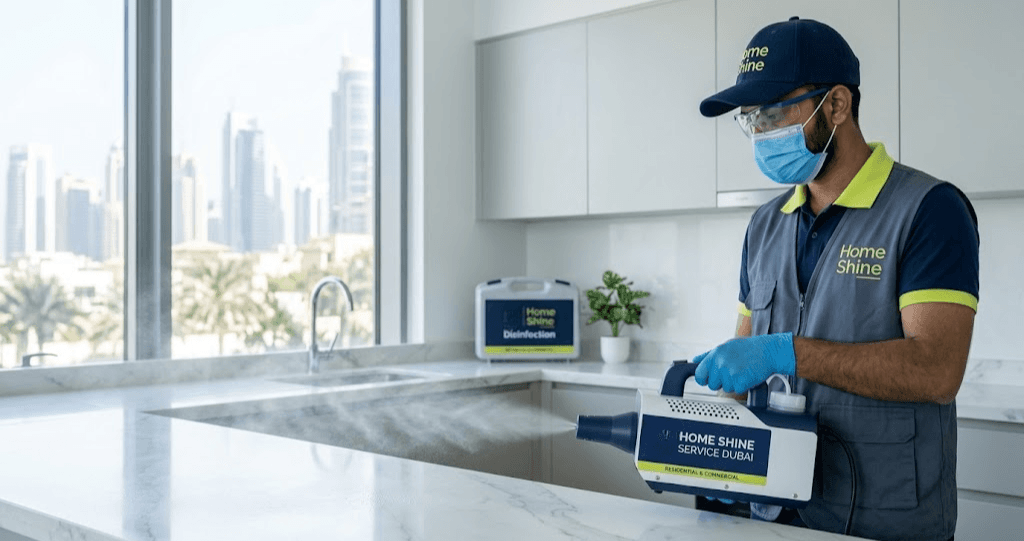
- Cold or ULV fogging distributes a fine mist through a room where the disinfectant label permits it. It is not a substitute for pre-cleaning, and does not automatically reach every surface.
- Electrostatic spraying charges droplets so they cling to surfaces more evenly.
- Steam or heat-based methods for some mattresses, sofas and carpets, depending on the material.
5. Contact time. Every disinfectant has a manufacturer-specified contact time: the period the surface must remain visibly wet for the product to work as intended. Wiping too early removes the product before it has done its job.
6. Ventilation and re-entry. Rooms are aired out. Residents, children and pets return only after the product's re-entry guidance has passed.
7. Final wipe-down where needed. Food-contact surfaces and areas children touch may need rinsing depending on the product used.
What should residents check before booking a disinfection service in Dubai?
Product details. Ask which disinfectant will be used and whether it is registered or authorised for its intended use in the UAE. If a provider claims Dubai Municipality approval, ask for the product name and supporting documentation rather than accepting the claim alone.
Contact time and dilution. The technician should be able to explain the product's required contact time and dilution rate.
Child and pet safety. Ask about required ventilation and re-entry times, and whether food-contact surfaces need rinsing after treatment.
Trained, verified staff. Technicians should be trained to handle and apply cleaning and disinfecting products safely.
Clear scope and pricing. The quote should specify which areas are included: rooms, high-touch surfaces, bathrooms, kitchens and furniture. Total price and any additional charges should be stated upfront.
Realistic claims. Be cautious of offers promising 100% elimination or permanent protection. Surfaces can be recontaminated as soon as they are touched again.
Which surfaces and areas matter most?
Not every surface carries the same risk. Time and product are best spent where hands, moisture and food interact.
High-touch points: door handles, light switches, remote controls, lift buttons, phone stands, handrails and cabinet pulls.
Bathrooms: toilet seats and flush handles, taps, basins, shower controls and bath mats.
Kitchens: counters, fridge handles, sink areas, bins and food-preparation surfaces. Use products specifically approved for food-contact surfaces and follow any required rinse instructions.
Children's areas: play mats, hard toys, changing tables and floors.
Soft furnishings: sofas, mattresses, curtains and carpets. These are porous, so steam or products designed for fabric are more suitable than standard surface disinfectants.
How often should homes be disinfected?
There is no single schedule that suits every household. Frequency depends on who lives there and what has happened recently.
- Routine households: maintain regular cleaning, with targeted disinfection only when there is a specific reason for it.
- Homes with infants, elderly residents or people with weakened immune systems: additional measures may be appropriate. Discuss frequency with a healthcare provider if needed.
- After illness: disinfect high-touch surfaces once the affected person has recovered.
- Short-let and rental properties: disinfection as part of each turnover, or on a cycle agreed with the property manager.
- Move-in and handover: once, after deep cleaning.
Repeated fogging on a fixed schedule without a specific reason adds unnecessary cost and chemical exposure. Treatment method and frequency should match the actual need.
Can disinfection be done at home without a professional?
DIY cleaning is suitable for many routine tasks: wiping handles and switches, cleaning bathrooms and kitchens with appropriate products, washing laundry, and disinfecting suitable high-touch surfaces such as remotes and phones.
Professional services are more useful for large homes, post-renovation cleaning, property turnovers, or situations where consistent treatment across an entire property is difficult to manage independently.
Regardless of the approach: never mix cleaners or disinfectants unless the product label specifically states they can be combined. Mixing bleach with ammonia-based or acidic cleaners can produce toxic gases. Product labels provide approved uses, application instructions, dilution rates, contact times and safety precautions.
Most common mistakes with home disinfection
Skipping cleaning first. Disinfectant applied to a dusty or greasy surface loses effectiveness.
Wiping too soon. The product needs its full contact time to work.
Treating fogging as a substitute for cleaning. A room that looks disinfected but was not cleaned first still has a soil film on its surfaces.
Using disinfectant on everything. Porous items such as sofas, carpets and mattresses need methods designed for fabric. Some materials, including leather and natural stone, can be damaged by harsh chemicals.
Ignoring ventilation. Closed rooms with strong products create avoidable exposure for residents, especially children and pets.
Choosing on price alone. A very low quote may reflect a narrower scope, fewer treatment steps or different products. Ask what is included before comparing prices.
Expecting lasting protection. Surfaces are protected only until they are touched or contaminated again.
Is disinfection safe for children, pets and allergy-prone households?
Safety depends on using the correct product, concentration, application method and contact time, and following the manufacturer's ventilation and re-entry instructions. Households with children, pets or people with respiratory or allergy concerns should ask which products will be used. Where appropriate, ask whether a lower-odour product is available, and ensure no one re-enters treated areas until specified times have passed.
Toys, pet feeders and utensils should be cleaned according to their material and the manufacturer's instructions. Items that contact food should only be treated with products approved for that use.
Book a professional disinfection service in Dubai
HomeShine covers apartments and villas across Dubai. Trained, background-verified technicians. Eco-friendly products safe for children and pets. Transparent pricing with same-day availability.
Book NowFrequently asked questions
What is the difference between a disinfection service and a sanitisation service in Dubai?
A sanitisation service reduces microorganisms on a surface to a level considered safe under the applicable standard or product label. A disinfection service uses a product intended to kill or inactivate specific microorganisms. The distinction matters when choosing a service after illness or for a high-risk household situation.
How long does home disinfection take in Dubai?
Duration depends on property size and method used. A small apartment takes less time than a multi-room villa, and the total includes pre-cleaning, product application, contact time and ventilation before re-entry. A provider should give an estimated duration and crew size before the visit.
Is home sanitising in Dubai safe for babies and pets?
It can be, provided the product is suitable for residential use, the room is ventilated properly, and residents stay out until the re-entry period passes. Ask for the product name and Safety Data Sheet before the service begins.
Does disinfection replace regular home cleaning?
No. Cleaning must come first because dirt reduces the effectiveness of some disinfectants, and disinfection does not remove dust, grease or stains. The two processes work together. HomeShine technicians recommend a deep clean before any disinfection treatment.
How often should a Dubai home be professionally disinfected?
Most households need it only after specific events: illness, a newborn's arrival, a move or a guest turnover. Homes with vulnerable residents may benefit from periodic visits, ideally guided by a healthcare provider's advice. Repeated treatment on a fixed schedule without a specific reason is generally not necessary.
Can mattresses and sofas be sanitised as well?
Yes, but through methods suited to fabric, such as steam, heat or UV-based treatment, rather than heavy chemical spraying. These services are usually booked alongside mattress or sofa cleaning rather than as standalone disinfection visits.