 Claude
 Perplexity
TL;DR
- Dubai shower tiles typically accumulate three distinct problems: limescale (mineral deposits), soap scum (soap residue mixed with body oils and hard water minerals), and grout staining (mildew, dirt and trapped moisture). Each requires a different approach.
- Ceramic and porcelain tile surfaces tolerate mild acidic cleaners better than natural stone. Marble, travertine and limestone are acid-sensitive and should never be cleaned with vinegar or citrus-based products.
- The correct sequence is: rinse, apply the right cleaner, allow contact time, scrub grout lines with a brush, rinse thoroughly, then dry.
- Drying shower surfaces after each use is one of the most effective ways to reduce mineral spots, soap residue and moisture buildup over time.
- Cracked grout, black stains that return within days, or etched stone all indicate that professional tile or grout restoration is needed rather than further DIY cleaning.
Water hardness, high indoor humidity during Dubai's summer months, frequent shower use and limited ventilation combine to create conditions where mineral deposits and residue build quickly. A cloudy film forms on tile surfaces, grout lines turn grey, yellow or black, and white crust accumulates around fixtures. Knowing the correct product for each tile type matters as much as cleaning frequency because the wrong cleaner can dull the tile surface or damage the grout sealer.
This guide explains what each type of buildup is, how to identify your tile material before choosing any product, and the steps to remove limescale, soap scum and grout staining. It also covers common mistakes, maintenance habits and when professional cleaning is the more practical option.
Read also
What builds up on shower tiles in Dubai bathrooms?
Three different problems often appear together, which is why a single spray rarely fixes everything.
| Residue | What it looks like | What causes it |
|---|---|---|
| Limescale | White, chalky, rough crust; spotting on dark tiles | Calcium and magnesium left behind when water evaporates |
| Soap scum | Cloudy, waxy or greyish film; slippery feel | Soap fats reacting with water minerals, plus body oils and skin cells |
| Grout staining | Grey, yellow, pink or black discoloration in grout lines | Absorbed moisture, mildew, dirt and trapped soap residue |
Limescale forms when water evaporates and leaves its dissolved minerals on the surface. In a warm Dubai bathroom, drops on glass, chrome and tile dry quickly, causing mineral layers to accumulate and bond to the surface faster than in cooler or more humid climates.
Soap scum is a separate film created when fatty acids from soap react with the calcium and magnesium ions in hard water. The resulting residue has a textured surface that captures bacteria, oils and dead skin. Traditional bar soaps tend to produce more soap scum in hard water than liquid body washes, which typically use synthetic surfactants.
Grout is the third factor. Cement-based grout is porous and absorbs mineral-rich water and soap faster than the glazed tile surface beside it. Sustained moisture in grout lines leads to mildew. Smaller enclosed shower areas can be harder to ventilate, while larger villas may simply have more tiled surface and grout to maintain. In both cases, the same cleaning process applies; only the scale of the work changes.
Which type of tile do you have?
Identifying the tile material before choosing any product prevents most costly mistakes.
Ceramic and porcelain tiles have a hard, glazed surface. They are generally more resistant to mild acidic cleaners than natural stone, but the grout, sealers and manufacturer care instructions still apply.
Natural stone tiles including marble, travertine and limestone contain calcium carbonate, which is also the main component of limescale. When acid contacts these surfaces, it dissolves the calcium carbonate and leaves dull spots called etch marks. Etching is not a stain and cannot be reversed by sealing or scrubbing. Lemon juice, vinegar and most bathroom descalers are acidic. Use a pH-neutral stone cleaner for any stone shower.
If the tile material is not known, check handover documents, the tile invoice or ask building maintenance. Do not test an unknown stone with vinegar, as acidic products can etch calcareous stones permanently.
What supplies do you need?
Most jobs require a microfiber cloth, a soft-bristle brush, a grout brush or old toothbrush, a spray bottle, a squeegee, rubber gloves and eye protection. For routine buildup, a tile-safe bathroom cleaner handles most surfaces. Baking soda mixed with a small amount of dish soap provides gentle scrubbing action for glazed tile. A pH-neutral stone cleaner is the only safe choice for marble, travertine and limestone. Avoid steel wool, wire brushes and abrasive powders, as they scratch the glaze and roughen the grout surface.
How to clean shower tiles step by step
This method works for ceramic and porcelain tile. For stone tile, follow the same steps using only a pH-neutral cleaner.
Step 1: ventilate and prepare
Switch on the extractor fan or open a window, put on gloves and eye protection, and remove all bottles and accessories from the shower area.
Step 2: rinse the surface
Run warm water over the tiles for about 30 seconds. This loosens surface dirt and wets the tile evenly so the cleaner spreads properly.
Step 3: remove loose residue first
Wipe away the heaviest film with a damp cloth before applying cleaner. This allows the product to reach actual buildup rather than sitting on top of loose debris.
Step 4: apply cleaner
Spray a tile-safe bathroom cleaner across walls and floor, working from the bottom upward to avoid streaks running down over already-cleaned areas. For stubborn zones, use the targeted methods in the sections below.
Step 5: allow contact time
Follow the manufacturer's specified contact time, which varies by product and buildup type. Never let acidic products dry on the surface.
Step 6: scrub tile and grout
Use small circular motions with a soft brush on tile surfaces, then run a grout brush along each grout line.
Step 7: rinse thoroughly
Cleaner residue left on the surface attracts new dirt and creates a hazy film. Rinse several times until the water runs clear.
Step 8: dry the surface
Squeegee walls and buff with a microfiber cloth. Water left on tile gives minerals another opportunity to evaporate and deposit spots.
How to remove limescale from shower tiles
For light limescale on glazed ceramic or porcelain, a diluted white vinegar solution can dissolve mineral deposits. Check the tile and grout manufacturer care instructions first, and rinse thoroughly after treatment. Spray the affected area, leave for a few minutes, wipe with a cloth and rinse well. Heavier crust may need a slightly stronger ratio or a dedicated bathroom descaler, used exactly as the label directs.
A few points keep the process safe:
- Rinse acidic solutions off completely and do not leave them sitting for extended periods.
- Vinegar and lemon can irritate skin, so gloves are necessary throughout.
- Repeated exposure to acidic cleaners can degrade some grout sealers over time. Minimize contact with grout lines and follow the sealer manufacturer care instructions.
- Never combine vinegar-based products with bleach. The mixture releases hazardous chlorine gas.
Limescale typically appears as a surface deposit on glazed tile and does not damage the tile itself. It also accumulates on glass, taps and showerheads. A partially clogged showerhead produces an uneven spray that concentrates water on certain wall areas, which can increase spotting in those zones.
For marble or travertine, avoid acidic descalers entirely. Use a cleaner formulated specifically for natural stone. If mineral deposits have bonded to or etched the stone surface, professional stone restoration is likely required rather than further cleaning.
How to remove soap scum from shower tiles
Soap scum needs a cleaner that breaks down fats rather than one that only dissolves minerals. Three approaches work well on glazed tile:
Dish soap and warm water
A few drops of grease-cutting dish soap in a spray bottle removes light soap film effectively and safely on most glazed tile types.
Baking soda paste
Mixed with a little dish soap and water, a baking soda paste provides gentle scrubbing action without scratching the glaze. Spread it across the affected area, wait ten minutes, scrub and rinse thoroughly.
Commercial soap scum remover
Products labeled for soap scum and limescale contain surfactants that lift waxy layers. Confirm the product is suitable for your specific tile type and grout before applying it across a full shower.
If a cleaner makes no impact on the residue, the problem may be mildew or heavy mineral scale rather than soap scum. In that case, the grout and limescale methods described above apply instead.
How to clean grout lines without damaging them
The right approach depends on how deeply the staining has penetrated the grout.
Light staining
Apply a baking soda paste or a purpose-made tile grout cleaner to the lines. Leave it for ten to fifteen minutes and scrub with a grout brush using small circular strokes. Rinse and dry thoroughly.
Mildew or dark spots
A grout cleaner containing hydrogen peroxide or oxygen bleach may help with discoloration when it is specifically labeled for the grout type and color. Always follow product instructions and test in an inconspicuous area first. If mold or mildew is suspected, use a product appropriate for mold removal and address the underlying ventilation or moisture issue that allows it to return. Do not assume that a hard-surface disinfectant suitable for non-porous tiles is also safe for porous grout.
Shower floor grout
Floor grout collects the most water, so lines between floor tiles often darken first. A stiff nylon brush and extra contact time help here, followed by a thorough rinse to ensure no residue remains in the joints.
After cleaning
Once grout is fully dry, applying a suitable grout sealer helps reduce moisture and stain absorption going forward. Resealing frequency depends on the grout and sealer type, so follow the manufacturer instructions rather than applying it on a fixed annual schedule.
Grout that has crumbled, cracked or pulled away from tile no longer responds to cleaning. Water can reach behind tile at that point, and repair or regrouting (sometimes offered as grout restoration) is the appropriate next step. For more on what a professional bathroom clean covers, see the bathroom deep cleaning Dubai guide.
When should shower tile cleaning be left to professionals?
DIY cleaning works well for routine upkeep and light to moderate buildup. Professional tile and grout cleaning is a better choice in these situations:
| Situation | DIY | Professional |
|---|---|---|
| Weekly film and light spotting | Suitable | Not needed |
| Moderate soap scum on glazed tile | Suitable with repeated treatments | Optional |
| Thick, long-standing limescale | Often slow | Faster with commercial descalers and machines |
| Dark grout that returns within days | Limited results | Deep cleaning and possible resealing |
| Etched or cloudy marble or travertine | Unsafe to attempt | Honing and polishing by a stone specialist |
| Cracked or missing grout | Cleaning cannot fix it | Repair or regrouting |
| Move-out or tenancy handover | Time consuming | Efficient, consistent result |
Tenants preparing for handover, landlords turning over a unit, and Airbnb and holiday home hosts in high-turnover buildings often choose professional service for the uniform finish and time saved.
What mistakes make shower tiles harder to clean?
- Using vinegar or lemon on acid-sensitive natural stone. Even brief exposure can cause etching, which may require professional honing or polishing to correct.
- Mixing cleaning products. Bleach combined with acids or ammonia produces toxic fumes. Use one product at a time and rinse between applications.
- Skipping the rinse. Cleaner residue leaves a film that attracts soil and creates a haze that is often mistaken for soap scum.
- Scrubbing with abrasives. Scratches trap dirt and dull the glaze permanently.
- Letting acidic products dry. Dried acid can etch or discolor tile and grout surfaces.
- Never resealing grout. Sealer wears down over time, and unsealed grout absorbs stains much faster.
How often should shower tiles be cleaned?
| Task | Frequency |
|---|---|
| Squeegee walls and glass | After every shower |
| Quick wipe or light cleaner spray | Weekly |
| Scrub tiles and grout lines | Every two to four weeks |
| Descale showerhead and fixtures | Monthly |
| Reseal grout | Per sealer instructions, typically once a year |
| Professional deep clean | Every few months for busy family bathrooms, or when buildup outpaces DIY |
Households with several bathrooms in constant use, such as a family villa in Al Barsha or Jumeirah, often reach a deep clean threshold sooner than a single-occupant apartment.
How can buildup be prevented between deep cleans?
Prevention takes far less effort than removal. Squeegee tile and glass after each shower, run the extractor fan during and for several minutes after showering, and switch from bar soap to liquid body wash to reduce fatty acid residue. Keeping grout properly sealed reduces moisture and residue absorption, though it does not make grout completely waterproof. For a broader checklist of bathroom maintenance tasks, see the bathroom deep cleaning Dubai guide.
Book professional tile and grout cleaning in Dubai
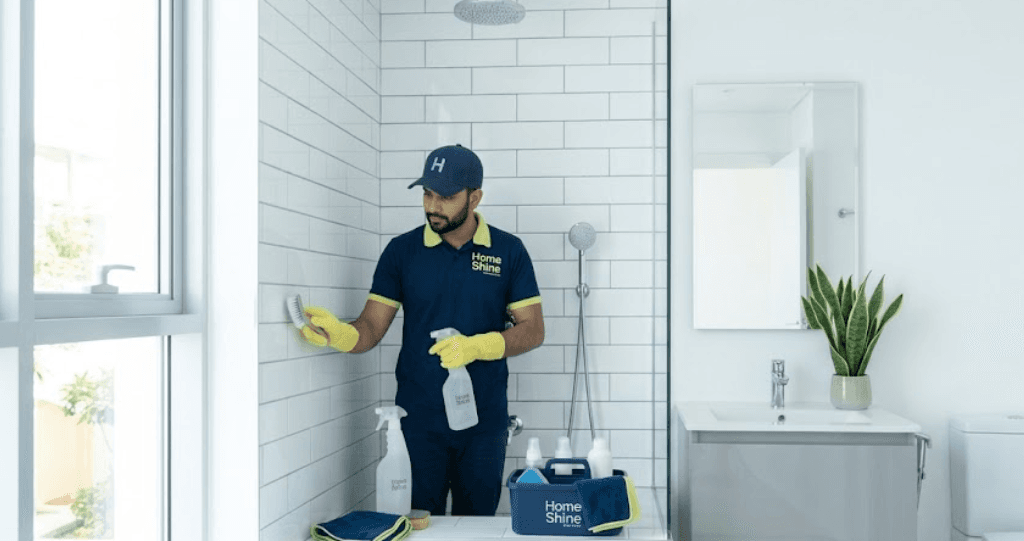
Tired tiles and stained grout lines do not have to mean a weekend of scrubbing. HomeShine offers bathroom and deep home cleaning for apartments and villas across Dubai Marina, JLT, Downtown, Business Bay, Palm Jumeirah, Al Barsha, Dubai Hills, JVC and other communities. Trained technicians, eco-friendly products, transparent pricing and same-day availability.
Book NowFrequently asked questions
What is the best way to clean shower tiles?
Rinse with warm water, apply a cleaner suited to your tile material, allow contact time, scrub tile and grout with a soft brush, rinse thoroughly and dry with a squeegee or microfiber cloth. Ceramic and porcelain tolerate mild acids, while marble and travertine need a pH-neutral stone cleaner.
How can limescale be removed from shower tiles?
On ceramic or porcelain, a diluted white vinegar solution or a dedicated limescale descaler dissolves mineral deposits. Rinse completely after treatment. Natural stone should never be treated with vinegar or lemon-based products.
Is vinegar safe on grout?
Vinegar is acidic and is not the safest routine choice for grout, particularly where a grout sealer is present. For regular grout cleaning, use a grout cleaner recommended for your grout type and follow the manufacturer instructions.
How can grout lines be cleaned between shower floor tiles?
A baking soda paste or a dedicated grout cleaner, combined with a grout brush and extra contact time, handles most floor lines. Persistent dark lines suggest deep mildew or damaged grout that needs professional attention.
How often should shower tiles be deep cleaned?
Weekly light cleaning combined with a monthly scrub keeps most bathrooms manageable. Busy family bathrooms or those with heavy mineral buildup often benefit from a deeper clean every few months.
Does HomeShine clean shower tiles and grout in Dubai?
Yes. HomeShine's technicians clean bathroom tiles and grout as part of deep cleaning and move-in or move-out cleaning across Dubai. A quote can be requested online or through WhatsApp.