 Claude
 Perplexity
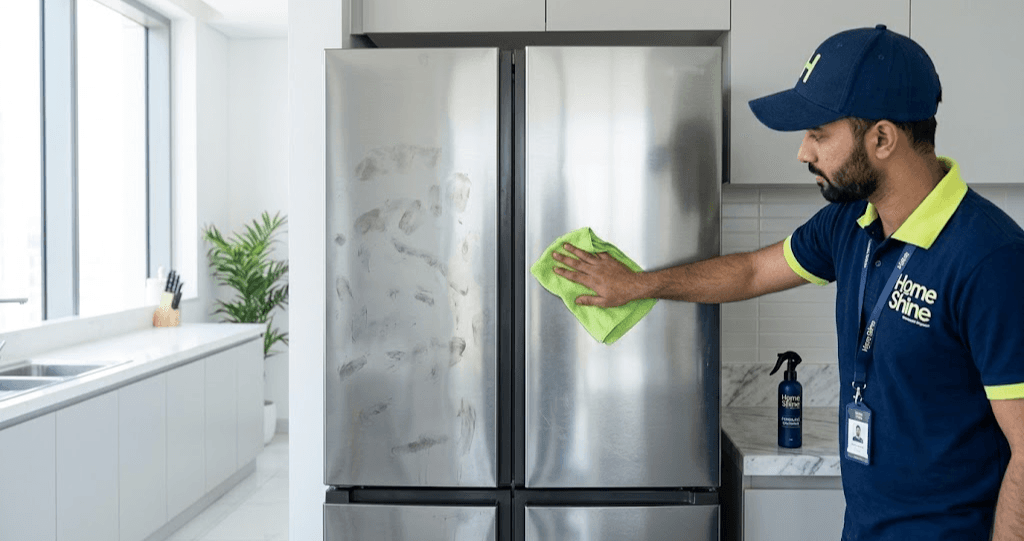
Stainless steel looks sharp in any kitchen, but it earns its nickname fast. A quick wipe leaves smears. A cleaning product leaves a film. You step back and the fridge looks worse than before you started.
The good news is that streaks are almost always a method problem, not a material problem. Once you understand why they happen, they are easy to prevent.
Why Streaks Happen on Stainless Steel
Most streaks come from one of four things:
- Soap residue not rinsed off: even a thin film of detergent dries shiny and uneven
- Wiping against the grain: stainless steel has a brushed direction -- cross it and you push residue into the texture instead of along it
- Hard water minerals: Dubai tap water is hard; the calcium and magnesium left behind when water evaporates look like a milky haze
- Oil or fingerprint smears spread rather than removed: wiping dry skin oils with a dry cloth just redistributes them
Fix the method and the streaks stop.
What You Need
Cleaning agents
- Mild dish soap (a few drops is enough)
- White vinegar (for mineral deposits and fingerprints)
- Rubbing alcohol or glass cleaner (for a final polish on visible panels)
- Baby oil or mineral oil (optional protective finish)
Tools
- Two microfibre cloths (one damp, one dry)
- Soft-bristle toothbrush or detail brush (for joins and edges)
- Spray bottle
- Distilled water (if your tap water is very hard)
Avoid steel wool, abrasive sponges, bleach, and anything containing chloride. These scratch the surface or break down the protective oxide layer that makes stainless steel stainless.
Step-by-Step: How to Clean Stainless Steel Without Streaks
Step 1: Find the grain direction
Look closely at the surface -- you will see faint parallel lines running either horizontally or vertically. This is the grain. Every wipe you make should follow these lines, not cross them. If you are unsure, wipe a small dry section and see which direction leaves fewer marks.
Step 2: Remove loose dust and crumbs first
Use a dry microfibre cloth to wipe off surface dust before introducing any liquid. Skipping this step means you are pushing grit across the surface, which causes fine scratches over time.
Step 3: Wash with mild soap and warm water
Add two or three drops of dish soap to a bowl of warm water. Dampen your microfibre cloth -- it should be damp, not dripping. Wipe along the grain in smooth, overlapping strokes. For greasy areas around handles and knobs, let the damp cloth sit for 30 seconds before wiping.
Step 4: Rinse away all soap
This is where most people shortcut and where most streaks come from. Dampen a clean cloth with plain water (distilled is better in Dubai) and wipe the surface again, following the grain. Any soap left behind will dry as a film.
Step 5: Dry immediately
Use a dry microfibre cloth to buff the surface dry before water can evaporate on its own. Work with the grain. In humid conditions -- which Dubai gets from September to November -- even a short wait lets water spots form. Do not air-dry stainless steel.
Step 6: Add a protective finish (optional but effective)
Put two or three drops of baby oil or mineral oil on a cloth and buff it into the dry surface, following the grain. Wipe off any excess. This fills microscopic surface scratches, repels fingerprints, and slows mineral deposit buildup. You will notice the difference within a week of regular use.
Dealing With Specific Problems
Fingerprints and smudges
Spray a small amount of glass cleaner or diluted white vinegar (1:1 with water) directly onto a microfibre cloth, not onto the appliance. Wipe with the grain and immediately buff dry with the other cloth. Do not spray liquids directly onto control panels or around electrical openings.
Water spots and mineral deposits
In Dubai, hard water deposits are common on dishwashers, sinks, and fridge doors. Dampen a cloth with undiluted white vinegar and hold it against the deposit for two to three minutes, then wipe with the grain. For heavy buildup, a paste of baking soda and water applied gently along the grain and rinsed off works well -- but test a small, hidden area first.
Stubborn grease or sticky residue
A small amount of rubbing alcohol on a cloth cuts through residue without leaving a film. Wipe with the grain, rinse with damp cloth, dry immediately.
What Never to Use on Stainless Steel
- Steel wool or abrasive pads: scratches the surface permanently
- Bleach or chlorine-based cleaners: breaks down the oxide layer; causes pitting and rust over time
- Oven cleaner sprays (on exterior surfaces): too harsh; leaves a chemical residue
- Paper towels: leave fine scratches and fibres; use microfibre only
- Wipes with fragrance or alcohol not designed for stainless: some leave their own film
Dubai-Specific Factors
Dubai's tap water comes from desalination but still contains minerals that build up on surfaces. If you notice a whitish haze on your appliances even after cleaning, the water is the culprit. The fix is simple: use a 50/50 mix of white vinegar and distilled water for your final rinse cloth. This is especially useful for dishwasher exteriors and kitchen sinks, which are wetted constantly.
The humidity spike from September to November also means drying time matters more. In peak humidity, water spots can form in under a minute. Keep your dry microfibre cloth close and do not walk away before the surface is buffed dry.
If your kitchen faces direct sun for part of the day, clean appliances in the cooler morning hours. Hot surfaces cause cleaning agents and rinse water to evaporate faster, which makes streaking more likely.
How Often to Clean Stainless Steel Appliances
- Daily: a quick dry buff with microfibre removes fingerprints from handles and high-touch areas
- Weekly: soap-and-water clean with full grain-following process for the whole appliance
- Monthly: oil treatment to maintain the protective finish and prevent buildup
- As needed: vinegar treatment when mineral deposits appear
A fridge door that is touched dozens of times a day needs more frequent attention than an extractor hood that is rarely touched. Calibrate the schedule to use, not to a fixed rule.
Common Mistakes
- Using too much soap: more soap means more residue to rinse. A few drops is enough for a full appliance.
- Wiping in circles: circular motion always crosses the grain somewhere. Always move in straight lines.
- Skipping the dry step: even a perfectly rinsed surface will show spots if it air-dries. The buffing step is not optional.
- Cleaning in the wrong order: if you have multiple appliances, work top to bottom. Drips from an overhead extractor hood onto a freshly cleaned fridge means doing it twice.
For other surfaces that need a careful approach, the same principle of following the material's direction applies -- see our guide on bathroom deep cleaning in Dubai for tile and fixture care.
When Professional Cleaning Is Worth It
Routine maintenance is easy to do yourself. But there are situations where professional cleaning makes more sense:
- Deep scratches or heavy pitting from past use of the wrong products
- Commercial kitchens where appliances need a hygiene standard that routine wiping does not meet
- Post-renovation cleaning where construction dust and residue have settled into every surface
- Move-in or move-out cleaning where appliances need to be restored to a presentable condition
For post-construction cleaning in Dubai, stainless steel is one of the harder surfaces to restore after building work. The dust is fine and adheres to the oil on the surface. Professional teams use specific degreasers and polishing compounds designed for stainless that are not practical to buy for a single clean.
For commercial spaces, office cleaning AMC contracts cover breakroom appliances as part of a regular schedule, which removes the burden of remembering to do it.
Leave the streaks to us
HomeShine's kitchen cleaning service covers stainless steel appliances, countertops, and fixtures -- properly cleaned, grain-aligned and buffed dry. Available across Dubai.
Book a kitchen cleanFrequently Asked Questions
What is the best way to clean stainless steel appliances?
Wipe with a damp microfibre cloth and a few drops of mild dish soap, following the grain direction. Rinse with a clean damp cloth (distilled water in Dubai reduces mineral spots), then buff dry immediately with a dry microfibre cloth. Finish with a small amount of baby oil if you want fingerprint resistance.
Is vinegar safe to use on stainless steel?
Yes, diluted white vinegar (1:1 with water) is safe for cleaning stainless steel and effective against mineral deposits. Avoid leaving undiluted vinegar on the surface for long periods; rinse it off after two to three minutes and dry immediately. Do not use vinegar near joints or seams where it could get into the appliance casing.
Why does my stainless steel look worse after I clean it?
Usually this means soap was not fully rinsed off, the surface was not dried before water evaporated, or you wiped against the grain, pushing residue into the texture. Try again: rinse more thoroughly with a clean damp cloth, dry immediately, and make sure every stroke follows the grain lines.
Can I use olive oil or coconut oil on stainless steel?
These work in a pinch but are not ideal. Food oils go rancid over time and can leave a smell. Baby oil (mineral oil) or a dedicated stainless steel polish are better choices because they do not break down and attract bacteria. If you only have olive oil available, use the smallest possible amount and buff it in thoroughly.
Hard water is leaving white marks on my appliances. What should I do?
Soak a microfibre cloth in undiluted white vinegar and hold it against the deposit for two to three minutes. The acid dissolves the calcium carbonate. Wipe with the grain, rinse with distilled water, and dry immediately. For ongoing prevention, use a 50/50 vinegar-distilled water mix as your final rinse cloth each time you clean.
Does HomeShine clean stainless steel appliances?
Yes. HomeShine's kitchen and home cleaning services include stainless steel appliances as a standard part of the scope. Our teams follow grain-direction cleaning and use products suited to Dubai's hard water conditions. You can book a one-off deep clean or a regular maintenance schedule through our website.