 Claude
 Perplexity
TL;DR
- Mold in Dubai apartments is usually caused by AC condensation, indoor humidity, hidden leaks and cold surfaces, not just obvious water damage.
- Small patches on hard, non-porous surfaces can often be cleaned safely with the right protective equipment if the moisture source is fixed first.
- A musty smell, hidden growth behind walls and patches larger than roughly 10 square feet need a professional assessment.
- Humidity control, AC maintenance and regular cleaning are easier to manage than repeated removal.
Mold can be a recurring concern in air-conditioned apartments across Dubai, including Dubai Marina, JLT, Business Bay, Al Barsha and JVC. Mold is a type of fungus that grows indoors when moisture, suitable temperatures and an organic food source are present. In Dubai, these conditions occur inside buildings during any season.
The cause is rarely a major flood or obvious water damage. Air conditioning, outdoor humidity, poorly ventilated spaces and cold surfaces can all create hidden damp areas that are easy to overlook. When dark spots appear on walls, ceilings or other surfaces, mold may already have been growing before it became visible.
This guide explains why mold grows in Dubai apartments, where it commonly hides, how to remove it safely, and how to address mold odour removal in Dubai homes.
Also useful
Why does mold grow so easily in Dubai apartments?
Mold needs moisture, organic material and moderate temperatures. Many mold species grow within typical indoor temperature ranges provided there is sufficient moisture and a food source. Dust, paint, gypsum board, wood and fabric all supply food.
The missing ingredient is usually moisture, and Dubai supplies it in several ways.
How does air conditioning contribute to mold?
AC systems cool air and remove some moisture from an apartment, but they do not guarantee that there is no dampness inside. If a system is poorly maintained, incorrectly sized or operating under conditions that prevent effective dehumidification, indoor humidity may remain too high. When warm, moist air contacts a cold surface, moisture in the air can condense into water droplets.
Condensation can form around AC components, chilled-water lines, aluminium window frames and other cold surfaces. Mold does not require a plumbing leak to grow; condensation can provide enough moisture when it stays on a surface long enough. AC drip trays, coils and drain pipes can accumulate moisture and dust. If drainage is blocked or these components remain damp, they can create conditions that support mold growth.
Blocked AC condensate drains can cause drain trays to overflow, allowing moisture to reach nearby ceilings or walls before stains or odours become noticeable. Regular AC duct cleaning in Dubai can help reduce this risk by keeping drainage clear and components dry.
Which hidden moisture sources are easy to miss?
Several less obvious sources feed mold in apartments:
- Slow plumbing leaks inside walls, under kitchen sinks or behind bathroom cabinets
- Balcony or terrace waterproofing failures that let moisture reach adjoining walls
- Humid outdoor air entering through door and window gaps during summer
- Poor bathroom and kitchen ventilation that traps steam
According to the US EPA's mold guidance, materials dried within 24 to 48 hours are less likely to develop mold. Moisture that lingers beyond that window is where problems begin.
Where does mold usually appear in a Dubai apartment?
Mold favours spots where cool surfaces, limited airflow and moisture overlap. In Dubai apartments, the most common locations are:
- Ceilings and walls around AC diffusers and return grilles
- Bathroom ceilings, grout lines, silicone seals and behind vanity units
- Window frames and sliding door tracks where condensation forms
- Corners of exterior-facing walls, especially behind sofas and beds
- Inside fitted wardrobes and closets, particularly along exterior walls
- Under kitchen sinks and around dishwasher or washing machine connections
- Undersides of mattresses and backs of upholstered furniture pushed against walls
For persistent issues in Dubai bathroom deep cleaning, professional treatment can reach behind fixtures and into grout lines that regular cleaning misses.
How can mold be spotted before it spreads?
Mold may appear as black, green, white, pink or orange spots or patches, depending on the species and surface. Other warning signs include unusual discoloration, bubbling or peeling paint, persistent dampness and a musty smell.
An ongoing earthy or musty smell can indicate hidden moisture or microbial growth in appliances, wall cavities or concealed spaces. Some people may experience nasal congestion, coughing, irritated eyes or worsening asthma symptoms in damp or mouldy environments. These symptoms can have many causes and do not by themselves confirm mold is present. A physician should evaluate any health concerns.
A hygrometer is an inexpensive way to detect issues early. The EPA suggests indoor relative humidity should stay at or below 60%, ideally between 30% and 50%. Humidity consistently above 60% increases the risk of mold growth.
Who is responsible for mold in a Dubai rental: tenant or landlord?
Responsibility depends on the cause of the moisture, the tenancy agreement and applicable rental rules. Structural problems, leaks or defects the landlord is responsible for may need to be addressed by the landlord. Issues caused by a tenant's actions or lack of reasonable care may be treated differently.
Tenants should photograph affected areas, record moisture readings where possible, document the problem in writing and keep copies of all communications. Dispute resolution is available at the Rental Disputes Centre for unresolved issues. This is a general overview and does not constitute legal advice. Consult a lawyer if you have questions about rights or obligations under law.
How to remove mold from a Dubai apartment: step by step
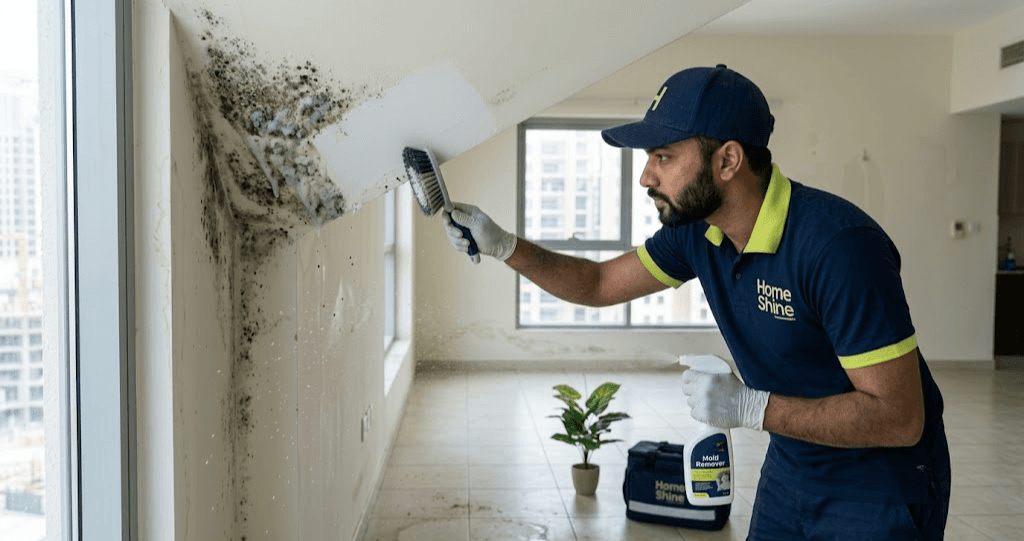
Small areas of surface mold on washable, non-porous surfaces can often be cleaned without specialist help. If the underlying drywall or other porous material is damp, damaged or extensively affected, professional assessment may be needed. The EPA generally uses roughly 10 square feet (about 3 ft by 3 ft) as a guideline for when occupants may handle cleanup themselves.
Step 1: protect yourself first
Wear an N95 respirator, rubber gloves and eye protection. Isolate the affected area from the rest of the apartment and avoid disturbing the mold unnecessarily. Follow the safety instructions for any cleaning product used.
Step 2: fix the moisture source
Stop the leak, clear the blocked drain or reduce humidity before cleaning. Cleaning without this step produces only a temporary result.
Step 3: choose the right cleaner
Detergent and water can work for light surface growth on appropriate washable surfaces. For more stubborn patches, use a mold cleaner labelled for that surface and application. Never mix bleach with ammonia or other cleaners, as toxic fumes can result.
Step 4: apply and scrub
Apply the selected cleaning product according to label instructions, allow the recommended contact time, then scrub or wipe the affected surface.
Step 5: wipe and dry completely
Follow rinsing instructions, then dry the surface with a fan or towel. Porous materials such as ceiling tiles, carpet padding, insulation and heavily stained gypsum board are difficult to clean effectively. When mold has penetrated these materials, removal and replacement is usually the only lasting fix.
How can mold odour be removed from a Dubai apartment?
Mold odour removal in Dubai requires locating what still holds the smell. Air fresheners and scented sprays only mask it, and the odour returns when the source is not dealt with.
A reliable approach follows this order: locate the source by checking AC vents, wardrobes, behind furniture, under sinks and around bathroom fixtures. A smell that intensifies near a specific area points to hidden growth. Clean and dry the source, then treat visible mold as described above and remove damp items entirely.
Wash or replace soft items. Curtains, cushions, bedding and clothes stored near mold absorb odour. Launder them on a hot wash where the fabric allows, or arrange professional fabric cleaning for sofas, curtains and mattresses. Clean the AC system, since musty air that appears when AC runs often originates in the coil, drip tray or ducts. These need proper AC filter and duct cleaning rather than surface wiping. Then ventilate and dehumidify.
If odour persists after all visible sources are cleaned and dried, mold is likely growing in a concealed space such as a wall cavity, ceiling void or behind fitted cabinetry. That situation needs a professional inspection.
When is professional mold removal in Dubai necessary?
DIY cleaning has clear limits. Professional involvement is advisable when:
- The affected area exceeds roughly 10 square feet
- Mold returns repeatedly after cleaning
- Growth appears inside AC ducts or on multiple ceilings
- A musty smell persists with no visible source
- Drywall, insulation or wood is soft, warped or crumbling
- Water-damaged materials remain wet or have not been adequately dried within 24 to 48 hours
- Occupants have asthma, allergies, weakened immunity, or are very young or elderly
The quality of mold removal services in Dubai varies significantly. A reputable provider should inspect the property for moisture sources, explain the required work and distinguish between surfaces that can be cleaned and materials that need replacement. Verify any certification claims before hiring and compare scope of work, not only price.
What mistakes make mold come back?
Most repeat outbreaks trace back to a short list of errors: cleaning without fixing the moisture source, painting over mold without addressing dampness, mixing cleaning chemicals, drying laundry indoors without ventilation, and relying on fragrance to mask odour instead of finding the source.
How can mold be prevented in a Dubai apartment?
Humidity control, proper ventilation and regular cleaning are the key measures.
Control humidity. Keep indoor humidity between 30% and 50% using a hygrometer as a guide. Use a dehumidifier in persistently damp rooms, and use the AC dry or defog function if available.
Use AC sensibly. Avoid setting the AC unnecessarily cold, as large temperature differences between indoor air and cold surfaces increase condensation risk. Clean filters regularly and check drains for blockages, particularly during summer.
Ventilate wet rooms. Run bathroom and kitchen extractor fans during and for at least 20 minutes after cooking or showering. Keep the bathroom door closed while showering and use the extractor fan to prevent humid air spreading through the apartment.
Wipe condensation promptly. Wipe condensation from window frames, sliding-door tracks and glass whenever moisture accumulates.
Leave space around walls. Keep furniture slightly away from exterior walls to allow airflow, especially where condensation is a concern.
Fix leaks quickly. Report leaky pipes and wet areas without delay. Dry wet materials ideally within 24 to 48 hours to reduce mold risk.
How often should mold-prone areas be cleaned?
Weekly: wipe shower surfaces and window tracks, and check bathroom silicone and other moisture-prone areas for early signs.
Monthly: check under sinks, behind furniture and inside wardrobes; clean AC filters; read hygrometer trend.
Quarterly: deep clean bathrooms, grout and kitchen wet areas; inspect ceilings near AC vents. A professional bathroom deep cleaning service in Dubai each quarter can reach behind fixtures and into grout where surface cleaning does not.
Every six to twelve months: inspect AC drainage and arrange professional AC cleaning; clean mattresses, sofas and curtains when they show dampness or odour. Rentals used for short stays should be checked between bookings.
Need help with moisture-prone areas in your Dubai home?
HomeShine provides deep cleaning for bathrooms, AC systems, sofas, mattresses and curtains. Mention any damp or mold-prone areas when booking so the scope can be planned correctly.
Book a deep cleanFrequently asked questions
What is the first thing to do when mold appears in a Dubai apartment?
Identify and stop the moisture source, then photograph the area and report it to the landlord or building management if the unit is rented. Small patches on hard surfaces can be cleaned with protective gear. Larger or recurring growth calls for professional mold removal in Dubai by a qualified provider.
Is mold in a Dubai apartment dangerous?
Mold can irritate the nose, throat, eyes and skin and may worsen asthma or allergies in sensitive people. Reactions vary widely. Anyone with health concerns should consult a doctor, and mold should be addressed promptly regardless of type.
Why does the apartment smell musty even after cleaning visible mold?
Odour often comes from hidden growth or from porous materials such as fabrics, mattresses and upholstery that have absorbed moisture. AC coils, drip trays and ducts are also common sources. Effective mold odour removal in Dubai depends on finding and drying the source rather than masking the smell.
Can AC cleaning help with mold?
Yes, when mold is on accessible components such as filters, vents, coils and drip trays. Professional AC cleaning removes dust and residue and helps address moisture-related buildup on accessible components.
How much does mold removal cost in Dubai?
Pricing depends on the affected area, materials involved, whether containment is needed and how severe the moisture problem is. Written quotes after an inspection are more reliable than phone estimates. Comparing scope of work, not only price, helps avoid repeat treatments.
How can mold be prevented during Dubai's humid summer months?
Keep indoor humidity between 30% and 50%, avoid setting the AC extremely cold, ventilate bathrooms and kitchens, and wipe condensation quickly. Regular AC maintenance and periodic cleaning of bathrooms and wardrobes help as well. A dehumidifier is useful in rooms that stay damp.