 Claude
 Perplexity
Upholstery covers the fabric, the padding and the frame materials underneath. That matters when you clean it, because fabric traps dust, absorbs spills and holds odours, while the padding below takes much longer to dry than the surface you can see. The goal is to lift dirt out of the fibres without pushing it deeper.
Dubai adds its own complications. Fine desert dust settles through most of the year, and humidity in coastal areas slows the drying of damp upholstery. In homes with children or pets, sofa fabric picks up food spills, pet hair and body oils from daily use. Frequent guests add to that.
This guide covers the care codes, the tools you actually need, a step-by-step method, stain removal, drying in Dubai's climate, the mistakes that cause lasting damage, and where professional cleaning makes more sense.
What do fabric sofa cleaning codes mean?
A care label sits under a seat cushion or on the underside of the frame. Checking it before you start reduces the risk of water rings, colour transfer and shrinkage.
- W: water-based upholstery cleaners may be used, subject to the manufacturer's instructions
- S: solvent-based, water-free dry cleaning products only. Water can cause rings, shrinkage or colour bleeding
- WS: either water-based or solvent-based cleaners can be used for spot cleaning
- X: vacuuming or light brushing only, as specified on the label. Do not use water-based or solvent-based products unless the manufacturer explicitly authorises a particular treatment
A W code does not mean the cover is machine washable. It means water-based products are acceptable for spot cleaning. Seat cushions, backs and scatter cushions can carry different labels, so check each one rather than assuming they match.
Where no label exists, the fabric type is the next best guide. Velvet, silk blends and linen react badly to moisture and harsh cleaning agents. Do not assume a delicate fabric is safe with water or household chemicals just because the label is missing. Check the manufacturer's guidance or ask a professional upholstery cleaner before treating it.
What tools and cleaners are needed to clean a fabric sofa?
Routine cleaning needs a short list. Specialist products add little for light maintenance and increase the risk of damage.
- A vacuum with upholstery and crevice attachments
- A soft-bristle brush
- Several white or light-coloured microfibre cloths, so any dye transfer is easy to spot
- A spray bottle
- Mild liquid dish soap or a fabric-safe upholstery shampoo, for W and WS codes
- A water-free upholstery solvent cleaner, for S and WS codes
- Distilled water, which avoids the mineral marks tap water can leave as it dries
Baking soda or cornstarch can absorb some surface oils and odours, but neither suits every fabric. Check the manufacturer's guidance and test in an inconspicuous area first. Skip powders entirely if the care instructions prohibit them.
Bleach, strong all-purpose sprays and carpet cleaning solutions do not belong on upholstery. They strip dye and leave residue that attracts more dirt.
How should a fabric sofa be cleaned step by step?
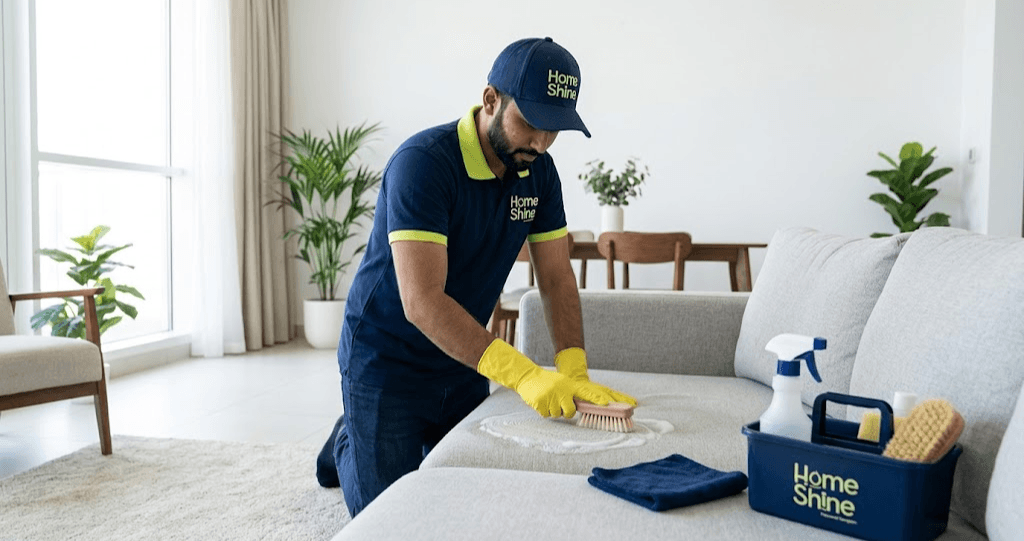
This method suits sofas labelled W or WS, provided the product is compatible with the fabric. For S-coded upholstery, use only a suitable water-free solvent cleaner according to its instructions, and do not substitute detergent or follow the water-based steps. For X-coded upholstery, keep routine care to vacuuming or light brushing and do not apply liquid cleaners.
Step 1: Check the label and run a patch test
Read every tag first. Apply a small amount of the appropriate cleaner to a hidden area, following the product instructions. Let it dry completely, then check for colour transfer, fading, texture change or water marks before going further. A patch test that looks fine while wet can still show a ring once dry, which is why the drying step matters.
Step 2: Vacuum the entire sofa
Remove the cushions and vacuum every surface, including seams, piping, arms and the frame underneath. Loosen embedded dust with a soft brush first. Dubai's fine dust packs into the weave and a vacuum alone often skims over it. Crumbs, coins and pet hair collect in the gaps.
Step 3: Mix a gentle cleaning solution
A few drops of mild liquid dish soap in distilled water works for most W and WS fabrics. Heavy suds are difficult to rinse out and leave a sticky film behind, so use less than feels necessary.
Step 4: Clean in small sections
Dampen a microfibre cloth and wring it until it is barely damp. Work one section at a time, following the direction of the weave, and blot rather than rub. Keep the fabric damp and never wet, because moisture that reaches the padding takes far longer to leave than moisture on the surface.
Step 5: Rinse away soap residue
If the care code permits water-based cleaning, wipe with a clean microfibre cloth lightly dampened with distilled water to lift the soap out. Avoid soaking the fabric. Detergent left in the fibres attracts dirt and leaves the upholstery looking dull or feeling tacky.
Step 6: Dry thoroughly and restore the texture
Press a clean dry cloth against each cleaned area to absorb excess moisture. Run air conditioning and fans to improve airflow, and stand removable cushions on their edges somewhere stable and well ventilated so they dry evenly. Keep the sofa out of direct sunlight, and do not use a hair dryer or other direct heat, which can fade colour and shrink fibres. Once it is completely dry, brush the fabric gently with a soft upholstery brush to lift the pile back, and vacuum again if any loose dirt remains.
How can common stains be removed from a fabric sofa?
Speed matters more than strength. A fresh spill sits on the surface of the fibres while an older one bonds to them. Blotting always comes before treatment, and scrubbing is avoided in every case.
Food and grease. Lift away solid residue with a spoon or blunt edge, then blot liquid with a clean dry cloth without rubbing. For greasy marks, follow the manufacturer's recommended method rather than reaching for water or whatever is under the sink. Where the manufacturer permits it, a small amount of baking soda or cornstarch left briefly on the stain and then vacuumed away thoroughly can absorb the oil. On S-coded and X-coded upholstery, avoid water-based spot treatments and unapproved powders.
Coffee, tea and juice. Blot promptly with a clean cloth, working from the outside of the spill towards the centre so you do not spread the edge outward. If the care code permits water-based cleaning, apply a suitable upholstery cleaner according to its instructions. Do not soak the fabric, and get professional advice if the mark persists.
Pet urine. Blot promptly without rubbing. If the label permits it, use a fabric-safe enzymatic cleaner according to its instructions. Urine penetrates into the padding, so a surface clean can remove the stain and leave the smell behind. Persistent odour usually needs professional treatment.
Body oils and sweat. These build up on armrests and headrests and show as gradual darkening rather than a defined stain. Clean these areas with a product suited to the fabric and its care code, keeping moisture and detergent residue to a minimum.
Ink, marker and wine. These are the hardest to shift. Blot gently, and resist the urge to keep applying more product, which usually spreads the stain and damages the fibres. If it persists, stop and ask a professional rather than escalating.
For a broader walkthrough of sofa cleaning beyond fabric specifically, see our guide on how to clean a sofa at home, and upholstery cleaning in Dubai for the professional side.
How does Dubai's climate change the way a fabric sofa should be cleaned?
Cleaning advice written for cooler, drier climates does not account for Dubai's dust, heat and seasonal humidity. Those conditions make moisture control and proper drying more important than the cleaning product you choose.
Dust comes first. Fine desert dust settles on sofas in villas across Arabian Ranches and Dubai Hills, and in any home near construction. Vacuum weekly, and more often if dust exposure is heavy. Removing loose dust before treating a spill stops you turning dry dust into mud inside the weave. Our piece on hidden allergens in Dubai sofas covers what accumulates below the surface.
Humidity slows drying. Damp upholstery in a poorly ventilated room can stay wet long enough to develop musty odours and mould. In hot weather, opening windows does less for drying than running the air conditioning with a fan, because the incoming air carries its own moisture. If you have seen mould elsewhere in the home, our guide to mould in Dubai apartments explains why it takes hold.
Sunlight fades fabric. Floor-to-ceiling glass in Downtown Dubai and JLT towers puts furniture under strong direct light for hours. Rotating removable cushions periodically spreads both sun exposure and everyday wear more evenly, and sheer curtains cut the direct light. Even so, always let damp upholstery dry fully rather than parking it in the sun to speed things up.
Water quality affects the result. Minerals in tap water leave visible marks on some fabrics as they dry. Where the manufacturer permits water-based cleaning, distilled water reduces that residue. Test on a hidden area first either way.
Usage peaks are predictable. Sofas take heavier use during Eid gatherings, majlis events and short-let guest turnover. Prompt spot cleaning and low-moisture methods help through those periods, provided they suit the fabric's care instructions.
How can smells be removed from a fabric sofa?
Persistent odours come from dirt, spills, pet urine or moisture trapped in the fabric and padding. Surface cleaning helps with light smells, but deeper contamination needs more than a wipe.
Start by vacuuming thoroughly. If the manufacturer permits powders, test a small amount of baking soda on a hidden area before applying it more widely, then remove it completely with an upholstery attachment. Skip this method if the fabric is delicate or the powder cannot be fully extracted.
Fragrance sprays mask a smell rather than remove it, and heavy use tends to leave its own residue. Pet urine, smoke, food and trapped moisture all sit between the layers where a vacuum cannot reach, so if the odour returns within a day or two, the source is still in the padding.
When is DIY enough, and when does a sofa need professional cleaning?
Home cleaning handles upkeep well. Recognising where it stops protects the sofa and avoids the cost of replacing it.
DIY is usually enough for weekly vacuuming and light brushing, fresh small spills on W or WS fabrics, and a seasonal refresh of a lightly used sofa.
Professional cleaning is the better call for:
- X-coded upholstery needing more than routine vacuuming, and S-coded upholstery needing more than a small spot treatment
- Set-in stains, including ink, wine and pet urine
- Smoke, musty or persistent odours
- Delicate fabrics such as velvet, silk blends and linen
- A sofa that has not been deep cleaned in over a year
- Move-in, move-out and short-let turnover cleaning, where a deep clean and fast drying are both needed
A professional cleaner can identify the fabric, choose a compatible method and use extraction equipment that pulls dirt and moisture back out rather than leaving it in the padding. The right technique depends on the sofa's construction, its care label and its current condition. Our guide to professional sofa cleaning covers what that involves.
What mistakes damage a fabric sofa during cleaning?
Most upholstery damage traces back to a small set of repeated errors.
- Using too much water. Soaked padding dries slowly in humid Dubai homes and can develop mildew and odour
- Scrubbing stains. Rubbing spreads the mark, damages fibres and leaves worn patches
- Skipping the patch test. Colour bleeding gets discovered after it has spread across a visible panel
- Ignoring care labels. Water on an S-coded fabric, or steam on an X-coded one, can leave permanent marks
- Using bleach or strong all-purpose cleaners. Harsh chemicals strip dye and weaken fibres
- Skipping the vacuum. Wetting a dusty sofa turns dry dust into mud inside the weave
- Drying with direct heat or sunlight. Fabric can fade, shrink or stiffen
- Sitting on it too early. Pressure on damp cushions pushes moisture deeper and leaves dents
How often should a fabric sofa be cleaned in Dubai?
A simple routine keeps a sofa in good condition and makes deep cleaning easier when it comes around. Treat the following as a baseline and adjust it to your household.
- Weekly: vacuum the surface, seams and under the cushions
- Monthly: brush the fabric, rotate and flip cushions, check for early marks
- Immediately: blot spills as they happen
- Every 6 to 12 months: schedule a deep clean
- Every 4 to 6 months: consider deep cleaning this often in homes with pets, young children, heavy sofa use or high dust exposure. Short-let properties with frequent turnover may need it sooner depending on soiling
Keeping a fabric sofa clean in Dubai
The approach that holds up over time is light maintenance done consistently, with professional cleaning booked when the job moves beyond spot treatment. In practice that means five things: read the care label before you apply anything, vacuum fully and patch test before you clean, use as little moisture as the job allows and blot rather than scrub, dry with air conditioning and airflow rather than heat or sunlight, and hand over set-in marks, lingering odours, delicate fabrics and X-coded upholstery to someone with the right equipment.
Dubai's dust, humidity and strong sunlight are what make those habits worth keeping. A sofa that gets vacuumed weekly and dried properly after a spill stays in good condition far longer than one that gets an aggressive clean twice a year.
HomeShine cleans fabric sofas in homes across Dubai. Our technicians identify the upholstery and select a method based on the fabric and its care instructions. You can confirm the products used, the price, service coverage and expected drying time before booking.
Ready to refresh the living room?
HomeShine's sofa cleaning service covers fabric, leather and delicate upholstery, matched to your sofa's care code. Full price confirmed before we start, across Dubai.
Book a sofa cleanCan a fabric sofa be cleaned with water?
It depends on the care code. W and WS fabrics tolerate water-based cleaners in small amounts, S fabrics need a solvent-based product, and X fabrics allow vacuuming only. Even on a W-coded fabric, the cloth should be barely damp rather than wet, so moisture does not reach the padding.
What is the best homemade cleaner for a fabric sofa?
A few drops of mild liquid dish soap in distilled water works for most W and WS fabrics, and baking soda handles light odours and grease where the manufacturer permits powders. Both need a patch test first. Vinegar, bleach and strong detergents can affect the dye and are best avoided.
How long does a fabric sofa take to dry in Dubai?
Drying time depends on how much moisture was used, the thickness of the fabric and the airflow in the room. A lightly damp surface in an air-conditioned room dries far faster than soaked cushions, which is the main reason to use minimal moisture and run a fan in humid conditions.
Is steam safe for cleaning a fabric sofa?
Steam suits some fabrics and damages others. It can harm S-coded and X-coded upholstery and delicate materials such as velvet. Check the care label, and ask a professional when the code or the fabric is uncertain.
How often should a fabric sofa be deep cleaned in Dubai?
Every 6 to 12 months suits most homes. Households with pets, young children or frequent guests, and homes close to construction or open desert, benefit from deep cleaning every 4 to 6 months.
Does HomeShine clean fabric sofas at home?
Yes. HomeShine technicians clean fabric sofas in customers' homes, including apartments in Dubai Marina, JLT and Business Bay and villas in Arabian Ranches and Dubai Hills. Products suited to homes with children and pets are used, and the full price is shared before the job begins. If you are unsure about your fabric, you can ask for a quote first.