 Claude
 Perplexity
A living room sees more daily activity than almost any other space in a home. It is where families eat in front of the television, entertain guests, children play and pets spend much of their time. In many Dubai households it also welcomes a steady flow of visitors. Cleaning it properly means knowing which surfaces need which treatment, and in what order the work should happen.
In Dubai, that order matters more. Fine desert dust enters through balcony doors and ventilation, air conditioning runs for most of the year, and construction nearby adds more particles to the air. A living room that looks tidy can still hold dust in sofa seams, along skirting boards and across AC vents.
This guide sets out a practical method for apartments in Dubai Marina, JLT and Business Bay as well as villas in Arabian Ranches and Dubai Hills. It covers supplies, the cleaning sequence, dos and don'ts, common mistakes, cleaning frequency and the point at which a professional service is the better choice.
Also read: How to clean a fabric sofa at home, rug cleaning in Dubai and AC filter cleaning in Dubai.
What should be ready before cleaning a living room starts?
Preparation saves more time than any cleaning shortcut. Gathering supplies first prevents the half-finished rooms that come from hunting for a missing cloth.
- Several clean microfibre cloths, kept separate for dusting, glass and floors
- A vacuum cleaner with a soft brush, crevice tool and upholstery attachment
- A long-handled or extendable microfibre duster for ceiling fans and high shelves
- A mild all-purpose cleaner and a pH-neutral floor cleaner
- A glass cleaner and a soft squeegee
- A bucket and a well-wrung mop or flat microfibre mop
- An old soft toothbrush for tracks and grooves
Clean tools matter as much as products. A clogged vacuum filter or a dust-laden cloth only moves dirt around, so empty the canister and rinse the cloths first.
What is the right order to clean a living room?
The order below follows one rule: dirt falls downward, so cleaning moves from high to low and from dry to wet. Following that sequence means no surface gets cleaned twice.
Step 1: Declutter before anything else
Remove items that do not belong in the room: cups, plates, toys, shoes, charging cables, newspapers and loose papers. Bin rubbish, return stray items to the right rooms and straighten cushions and throws. Decluttering exposes the surfaces that need cleaning and clears the vacuum's path.
Step 2: Dust from the top down
Start with the highest points: ceiling fans, light fixtures, curtain rods, tops of shelves and picture frames. Use a dry microfibre duster first, since a damp cloth on thick dust creates streaks and smears. Move down to bookshelves, console tables, coffee tables, side tables and skirting boards, and lift decorative items to clean beneath them rather than around them. Dust will fall onto lower surfaces during this stage, which is why the floor comes last.
Step 3: Clean electronics and high-touch surfaces
Television screens, remote controls, game controllers, light switches, door handles and smart home panels collect fingerprints and skin oils all day. Switch off and unplug electronics first. Wipe screens with a dry or very slightly damp microfibre cloth in gentle straight strokes. Spraying liquid directly onto a screen can let moisture seep behind the panel, so the cloth should take the product, never the screen.
Remote controls and switches can be wiped with a cloth lightly dampened with a mild disinfectant solution. The area behind the television stand is often forgotten and worth a quick dust.
Step 4: Refresh sofas, cushions and upholstery
Remove the cushions, then vacuum the frame, seams and the gap between seat and backrest with the crevice tool. Coins, crumbs and pet hair collect in these spots. Vacuum the cushions on both sides, then check the care label before treating any marks. Upholstery tags use standard codes:
- W: water-based cleaners are safe
- S: only a solvent-based upholstery cleaner should be used, with no water-based solutions
- WS: either type works
- X: vacuuming only, with no liquid at all
Blot spills with a clean cloth instead of rubbing, which pushes the stain deeper into the fibres. Leather sofas need a soft, slightly damp cloth and a leather-safe conditioner, never a general household cleaner. Removable covers can go in the wash if the label allows it. Our guide on cleaning a fabric sofa at home goes through the care codes in more detail.
Step 5: Clean windows, mirrors and sliding door tracks
Glass and mirrors collect dust and fingerprints quickly in a living room. Clean them with glass cleaner and a microfibre cloth or squeegee, working from top to bottom to avoid drips on finished sections.
Balcony sliding doors deserve extra attention in Dubai. The tracks trap sand and fine dust, which makes doors harder to slide and lets particles blow back into the room. Vacuum the track with the crevice tool, loosen packed dirt with a toothbrush and wipe it clean. Curtains and blinds belong in this stage too: a light pass with the brush attachment removes surface dust.
Step 6: Vacuum every floor surface and rug
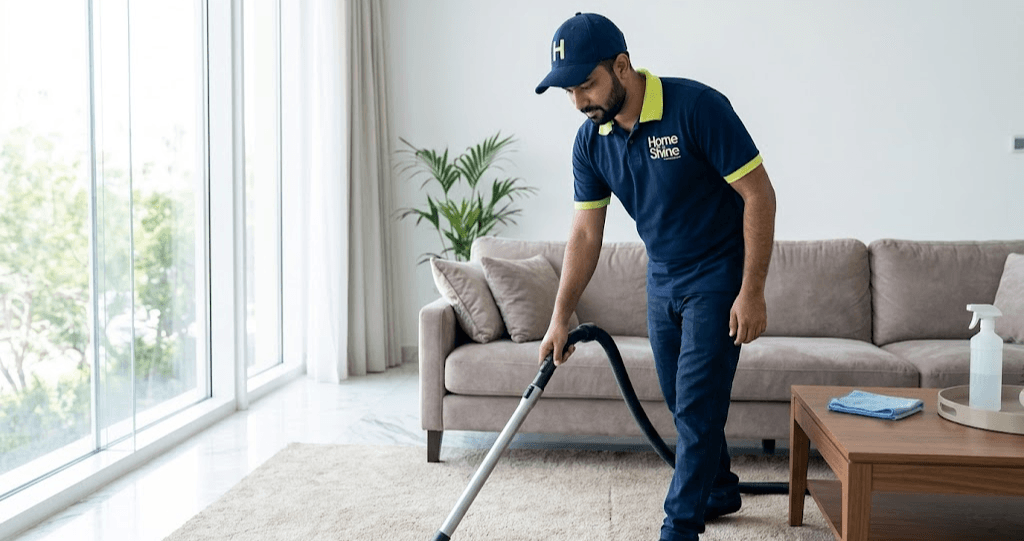
Vacuum after dusting, so fallen particles are collected in one pass. Work in overlapping lines and move lightweight furniture where possible to reach edges and corners. Rugs need slow, repeated passes, since dust sits deep in the pile. Lift smaller rugs and vacuum the floor underneath, then use the crevice attachment along the skirting boards.
Step 7: Mop hard floors last
Mopping comes at the end because a wet floor cannot be walked on without leaving marks. Use a pH-neutral cleaner suited to the flooring type, and keep the mop only slightly damp. Porcelain and ceramic tile tolerate regular mopping. Marble, natural stone and engineered wood need less water and gentler products. Let the floor dry fully before putting rugs back.
What are the dos and don'ts of cleaning a living room?
Most damage during home cleaning comes from using the wrong product or method on a delicate surface. These rules prevent the common problems.
Dos
- Clean from top to bottom so debris falls onto surfaces that are still to be cleaned
- Vacuum before mopping so grit does not scratch the floor under a wet mop
- Use separate cloths for glass, dusting and disinfecting to avoid streaks and cross-contamination
- Test any new product on a hidden patch of fabric, wood or leather before using it on a visible area
- Check care labels on sofas, cushions, curtains and rugs before applying water or cleaners
- Blot spills quickly with a clean, dry cloth instead of rubbing
Don'ts
- Do not spray cleaner directly onto screens, speakers or electronics. Apply it to the cloth
- Do not use vinegar on marble or other acid-sensitive natural stone. The acidity can etch the surface, dull the finish and leave permanent marks. Use a pH-neutral cleaner made for the stone
- Do not soak wood or laminate. Excess water swells boards and lifts the finish
- Do not mix cleaning products, particularly bleach with ammonia or acidic cleaners, which release harmful fumes
- Do not use a wet cloth on thick dust. It turns the dust into paste
- Do not apply harsh chemicals to leather, which dry out and crack the surface
- Do not skip the vacuum filter. A full or blocked filter reduces suction and releases fine dust back into the air
How does Dubai's climate change living room cleaning?
Dubai's environment makes a living room dirtier in specific, predictable ways, and a generic checklist overlooks all of them.
Fine dust returns fast. Desert dust enters homes through doors, windows and ventilation, settling on furniture, floors and other surfaces. A room dusted at the weekend can look hazy again within days, particularly after windy weather or a sandstorm. Our piece on how Dubai dust affects curtains and carpets covers what builds up in the fabrics.
AC vents recirculate it. Air conditioning runs for most of the year and moves dust through the room. Vent covers, ceiling diffusers and the areas directly beneath them collect a visible film. Wiping the vent covers removes the surface dust, and regularly cleaning the AC filters helps reduce what circulates through the living space. See AC filter cleaning in Dubai for how.
Sliding doors and balconies are entry points. Apartments in Dubai Marina, JLT and Business Bay often open straight onto a balcony, and villas in areas such as Arabian Ranches have large sliding doors to gardens. Both let dust and sand in through the tracks. Cleaning the tracks every week or two keeps doors working smoothly.
Humidity affects fabric. Coastal humidity in the warmer months can leave sofas and cushions with a musty smell if they are never aired or vacuumed.
Villas have extra surfaces. Double-height ceilings, large windows and a majlis create more places for dust to settle. High fixtures may need an extendable duster or a stable ladder to clean safely.
Which living room tasks can be DIY, and when is professional cleaning better?
Routine upkeep suits a household's own schedule. Deeper, equipment-based jobs often deliver better results when handled by trained technicians.
Tasks that work well as DIY:
- Daily tidying and surface wiping
- Weekly dusting, vacuuming and mopping
- Wiping electronics and high-touch points
Tasks where professional cleaning makes sense:
- Deep cleaning of fabric sofas, where hot water extraction may be suitable, and leather sofas, which need specialist products and treatment. See upholstery cleaning in Dubai
- Rug and carpet cleaning, since dust and allergens sit deep in the pile
- Curtain cleaning, particularly heavy or lined fabrics that are difficult to wash at home. See curtain cleaning in Dubai
- Professional duct cleaning, which may be worth considering when there is visible contamination, significant dust build-up or another specific maintenance concern. See AC duct cleaning in Dubai
- Move-in, move-out and pre-event deep cleans, when the whole property needs attention at once
Professional teams use equipment and products matched to each material, which lowers the risk of water marks, shrinkage or colour damage that home treatments can cause.
What mistakes do people commonly make when cleaning a living room?
Even a thorough effort loses value when the process itself has flaws. These are the habits that most often reduce results.
- Cleaning in the wrong order. Vacuuming first and dusting afterwards drops fresh dust onto a clean floor, so the room needs a second round
- Working with dirty tools. A saturated mop, a grey cloth or a full vacuum spreads soil instead of removing it
- Using too much water. Over-wetting upholstery, wood floors or rugs leads to slow drying, water rings and odours. Light moisture and good airflow work better
- Ignoring hidden areas. Under sofa cushions, behind the television unit, along skirting boards and above ceiling fans hold most of the accumulated dust, and they are skipped most often
- Treating all surfaces the same. One spray bottle for glass, wood, stone and screens is a shortcut that eventually damages something
- Forgetting soft furnishings. Cushions, throws and curtains absorb dust and odours, so a room can look clean while the fabrics still smell stale
How often should a living room be cleaned?
Frequency depends on household size, pets, children and how close the home sits to construction or open desert. These intervals suit a typical Dubai home and can be adjusted. Homes with allergies, shedding pets or frequent guests benefit from the shorter end of each range.
- Daily: declutter, straighten cushions, wipe visible spills
- Weekly: dust surfaces, wipe electronics and high-touch points, vacuum floors and rugs, mop hard floors (more often with pets or children)
- Every 1 to 2 weeks: clean sliding door tracks and AC vent covers
- Every 2 to 4 weeks: vacuum sofas and wash removable covers
- Monthly: clean windows, mirrors and curtains
- Every 3 to 6 months: deep clean sofas, rugs and curtains
How to keep a living room clean long term
A clean living room comes from a consistent system rather than occasional marathon sessions. Daily tidying, a focused weekly routine and a scheduled deep clean stop dust and grime building up to the point where it needs heavy treatment.
- Follow the top-down, dry-to-wet order every time
- Match each product to its surface and read every care label
- Pay special attention to Dubai-specific dust sources such as sliding door tracks and AC vents
- Keep tools clean so they remove dirt instead of spreading it
- Hand deep upholstery, rug and curtain cleaning to trained professionals when home methods fall short
For households short on time, HomeShine provides professional home cleaning across Dubai, including deep cleaning, sofa and carpet cleaning, curtain cleaning, mattress sanitisation and AC cleaning. Technicians arrive with equipment and products selected for different surfaces, and pricing is transparent.
Short on time for a full living room clean?
HomeShine handles floors, surfaces, sofas, carpets and curtains in one visit across Dubai, with the price confirmed before we start.
Book a home cleanHow can a living room be cleaned fast when time is short?
A fast reset focuses on what changes the look of the room most. Clear clutter and rubbish, straighten cushions, wipe the coffee table and other main surfaces, then vacuum the visible floor. This usually takes fifteen to twenty minutes and leaves the room presentable until a full clean is possible.
What should be cleaned first in a living room?
Decluttering comes first, followed by dusting from the highest surfaces down. Floors are always last, because dust and debris fall during the earlier steps. Following this order is the simplest way to clean a living room without repeating any task.
Is it safe to use vinegar when cleaning a living room?
Diluted vinegar suits some surfaces, such as glass. It should not be used on marble, granite, natural stone, unsealed wood or some fabrics, because the acidity can damage the finish. Check the material and any care label first to avoid permanent marks.
How can dust be reduced in a Dubai living room?
Regular damp microfibre dusting, weekly vacuuming with a filter that traps fine particles and keeping sliding door tracks clean all help. Wiping AC vent covers and washing curtains and throws on a schedule also reduces the dust circulating in the room.
How often should sofas and rugs be professionally cleaned?
Most Dubai households benefit from a professional clean every three to six months, depending on use. Homes with children, pets or allergy concerns may prefer shorter intervals. Professional cleaning removes embedded dust and odours that regular vacuuming cannot reach.
Can HomeShine clean an entire living room in one visit?
Yes. HomeShine technicians can handle floors, surfaces, sofas, carpets and curtains in a single booking, depending on the service selected. The team uses eco-friendly products suitable for homes with children and pets and follows methods suited to each surface. A free quote can be requested through the booking page or WhatsApp.