 Claude
 Perplexity
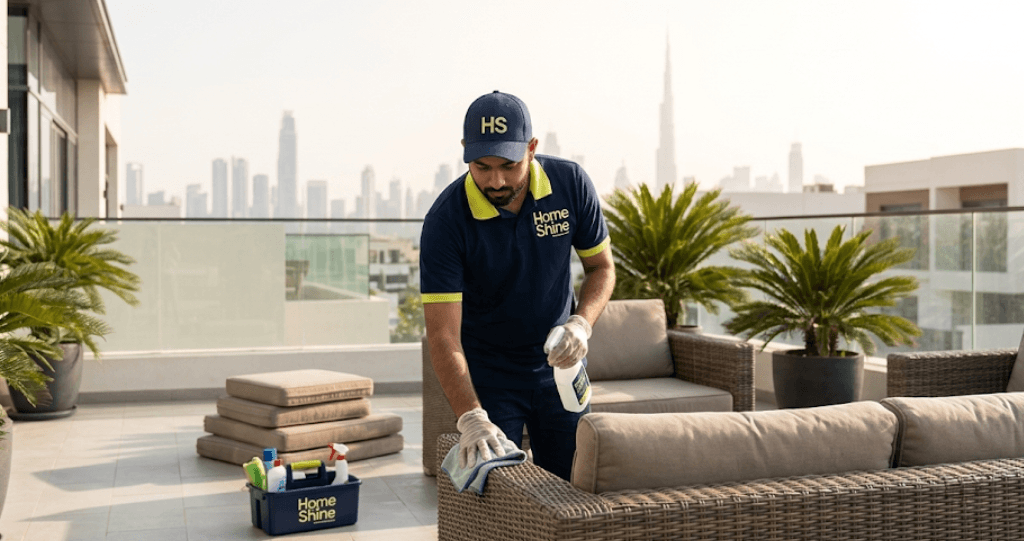
Outdoor furniture cleaning in Dubai is a seasonal job, not a one-off chore. Balconies, terraces and gardens see little use through the long summer, so by October the furniture has collected months of fine dust and been exposed to humidity and strong sunlight.
October to April is the comfortable stretch for dinners, family gatherings and weekend mornings outside. Furniture that looks fine from a distance can feel sticky, smell musty or leave grey marks on clothes once you sit on it.
This guide covers why outdoor furniture needs a clean before the season, what supplies you need, how to clean wood, metal, rattan, fabric and plastic, the mistakes to avoid and when professional cleaning makes sense. It applies whether you have a balcony in Dubai Marina or JLT or a villa terrace in Arabian Ranches or Dubai Hills.
Also read: balcony cleaning in Dubai, mould in Dubai apartments and villa cleaning in Dubai.
Why does outdoor furniture need cleaning before the season starts in Dubai?
Dubai is hard on outdoor furniture. Fine desert dust settles soon after cleaning and works its way between fabric fibres and woven strands. Strong sun fades wood, plastic and outdoor fabric, and humidity, especially near the coast, builds up moisture in cushions and under covers.
These conditions combine in ways that are easy to miss. Moisture mixed with dust leaves a sticky layer on surfaces. Sprinkler water leaves mineral deposits on frames and glass, and bird droppings stain if they are not cleaned promptly. Furniture left uncovered, or stored somewhere poorly ventilated, can trap moisture around the cushions and grow mould.
A clean before the season does three practical things:
- Removes dust, allergens and other contaminants from surfaces where children, guests and pets sit
- Gets abrasive grit off before it scratches surfaces during use
- Leaves furniture clean, dry and comfortable when the cooler weather arrives
What should be prepared before cleaning outdoor furniture?
Getting supplies ready takes about ten minutes and prevents most mistakes. Work in the shade during the cooler part of the day, early morning or late afternoon. Hot metal and glass make cleaning solutions dry too fast, leaving streaks and soap residue that is hard to rinse off. A basic kit covers almost every material:
- A soft-bristle brush and a few microfibre cloths
- A vacuum with a brush attachment
- Mild dish soap or a gentle detergent
- Two clean buckets, one for soapy water and one for rinse water
- Baking soda for odours and gentle scrubbing
- A garden hose with a spray setting on low or medium pressure
Keep vinegar and other acidic cleaners away from natural stone. Before any liquid touches the furniture, check the manufacturer's care label where there is one. Imported teak, rope and designer sets often come with specific instructions, and following them protects both the finish and the warranty.
How is outdoor furniture cleaned step by step?
This general sequence suits most sets. The material-specific adjustments follow in the next section.
- Remove loose dirt and debris. Brush dust, cobwebs and leaves off the frames with a soft brush and vacuum cushions and fabric. This stops loose dirt turning into mud once water is added.
- Take off cushions and covers. Clean them separately so the foam does not get soaked and the frames dry faster.
- Mix a mild cleaning solution. A few drops of dish soap in warm water handles most grime. Stronger products are rarely needed at this stage.
- Wash from top to bottom. Work one section at a time with a soft brush or cloth, paying attention to joints, undersides and crevices where dust collects.
- Rinse gently. Use a gentle hose spray rather than a high-pressure jet, and keep going until all soap residue is gone.
- Dry completely. Wipe frames with a microfibre cloth and leave everything in a ventilated spot until fully dry. Let cushions air-dry before putting them back, because damp cushions are where mould starts.
How should each material be cleaned?
Aluminium and powder-coated metal
Aluminium is light and naturally rust-resistant, which is why it is so common for outdoor frames, but its surface can still oxidise or turn chalky over time. Clean with warm soapy water and a soft cloth, then rinse and dry thoroughly. For stubborn mineral deposits, use a cleaner the manufacturer recommends. Avoid bleach and abrasive pads, which damage the protective finish, and work in the shade so the solution does not dry on the metal.
Synthetic rattan and wicker
Woven furniture traps dust and debris between the strands. Loosen it with a soft brush or vacuum with a brush attachment, then wipe with mild soapy water and a soft cloth. Rinse lightly and let it dry completely.
Teak and hardwood
Teak's natural oils help it resist moisture and insects, but dust and damp debris can still leave dark spots. Clean along the grain with a soft brush and mild soapy water, rinse lightly and let it dry. Do not pressure wash, as it tears up the wood fibres. Teak weathers to a silvery grey over time; if you prefer the original honey-brown colour, use a suitable maintenance product according to the manufacturer's instructions.
Outdoor fabric, cushions and sling seats
Cushions and fabric seats collect dust, sweat and odours, especially after months of use or storage. Take the cushions off, shake off loose debris and vacuum both sides. Spot-clean stains with diluted dish soap, blotting rather than rubbing.
Do not soak the foam. If it gets wet, stand it on its edge somewhere ventilated and out of harsh direct sun until it is fully dry. A fabric protector applied to clean, dry cushions helps repel light spills and makes routine cleaning easier. The same care-code logic used indoors applies here, as covered in our guide to cleaning a fabric sofa at home.
Glass, stone and ceramic tops
Dust and mineral spots show up clearly on glass. A glass cleaner, or a diluted vinegar solution where the manufacturer allows it, removes most marks. Use only mild soap and water on natural stone, since acidic cleaners etch the surface, and follow the manufacturer's guidance for ceramic tops.
Plastic and resin
Plastic can yellow or turn chalky under strong sun. Warm soapy water is usually enough. For stubborn marks, a little baking soda may help, but test it on a hidden spot first. Avoid abrasive scrubbers, which leave scratches that hold dirt.
How can mould, mildew and stubborn stains be removed?
After summer, mould is a common problem on cushions stored under covers and on furniture kept on shaded or enclosed balconies, where moisture and poor airflow let it grow. For light surface mildew, check the manufacturer's instructions first, use a cleaner compatible with the material, test it on a hidden area, and rinse and dry thoroughly. For cushions, avoid soaking the foam and use only fabric-safe products.
Other common stains need their own approach:
- Bird droppings: soften with a damp cloth first, then wipe and wash. Dry scraping scratches the surface
- Water and mineral marks: a vinegar and water wipe usually removes them from metal and glass, but not from natural stone
- Rust spots near fixings: brush gently and treat with a metal-safe product, because rust transfers to cushions and flooring
- Oil stains on cushions: blot the excess with a clean cloth, then use a fabric-compatible cleaner according to its instructions. Rubbing spreads the oil
If mould covers large areas, has got into the foam or keeps coming back, the underlying moisture problem needs fixing. At that point, replacing cushion inserts or booking a professional clean works better than repeated home treatment. Our guide to mould in Dubai apartments explains why damp areas keep recurring.
Which cleaning mistakes damage outdoor furniture?
Most damage comes from good intentions and the wrong product. These are the mistakes that come up most often:
- Pressure washing everything. High pressure is fine on some hard plastics but harms rattan, teak and fabric
- Mixing chemicals. Bleach and vinegar together release harmful fumes, and strong mixtures can discolour powder coating
- Cleaning in midday sun. Solutions dry too fast and leave marks, and metal gets too hot to handle
- Skipping the drying stage. Putting damp cushions back on frames is the fastest route to mildew
- Scrubbing too hard. Abrasive pads leave scratches that collect dust faster than the original surface
- Covering damp furniture. Moisture trapped under a cover through a humid Dubai night creates exactly the conditions mould needs
When is DIY enough, and when does professional outdoor furniture cleaning make sense?
Cleaning at home works for small balconies, a single lounge set or furniture with light dust and minor marks. It costs little and takes an afternoon. A professional clean is the better option for:
- Large villa terraces or garden sets with many pieces
- Heavy mould on cushions, or musty smells that remain after washing
- Delicate materials such as natural rattan, rope weaves or high-end teak
- Set-in stains on light-coloured fabric
- Poolside loungers exposed to chlorine, sunscreen and splashes
- Property managers or Airbnb hosts who need several units ready on a fixed schedule
Trained technicians use the right method for each material and handle the drying properly, which is where most home attempts fall short.
How often should outdoor furniture be cleaned in Dubai?
Frequency depends on exposure, material and how often the space is used. A practical routine:
- Weekly: dust frames and tables with a damp microfibre cloth and shake out cushions
- Monthly during the season: wash visible surfaces with mild soapy water and check for mildew or spots
- Twice a year: a full clean, once before the season in October and once at the end of the season in spring, before the furniture faces summer
- After dust storms or rain: wipe down promptly, because dust that gets wet hardens and is harder to remove
Poolside and open-terrace furniture needs attention more often than pieces on a covered balcony.
How can outdoor furniture stay clean through the season?
- Use breathable covers rather than sealed plastic, which traps moisture
- Store cushions indoors or in ventilated deck boxes when not in use
- Keep furniture slightly away from walls and railings so air can circulate
- Check balcony floor drains so water does not pool around legs and bases
- Apply a fabric protector to cushions and a sealer to wood once they are clean and dry
Is your outdoor furniture ready for the season?
A proper clean before the season turns a neglected balcony, terrace or garden back into a usable living space. The points to remember:
- Dust, humidity and sun in Dubai leave grime, mould and wear that need removing before use
- Aluminium, rattan, teak, fabric and glass each need a different method
- Gentle tools, mild solutions and complete drying protect both finish and structure
- Avoiding pressure washers on delicate materials, harsh chemicals and damp storage prevents most damage
- Regular light upkeep reduces the need for heavy restoration
For larger sets, heavily mould-affected cushions or delicate materials, HomeShine offers professional outdoor furniture cleaning across Dubai, with methods matched to each material so your balcony, terrace or garden is ready for the season.
Get your outdoor space ready for the season
HomeShine cleans outdoor sofas, cushions and furniture across Dubai with methods matched to each material, and the price is confirmed before we start.
Book outdoor furniture cleaningHow often should outdoor furniture be cleaned in Dubai?
A full clean twice a year suits most homes, once before the outdoor season and once at the end of it. Light dusting every week and a soapy wash each month keep dust and mildew from building up.
What is the safest way to clean outdoor furniture at home?
Start with dry brushing and vacuuming, then wash with warm water and mild dish soap, rinse with a gentle spray and dry completely. This suits most materials, but teak and rattan should never be pressure washed.
Can a pressure washer be used on outdoor furniture?
It depends on the material. Hard plastic and some metal frames tolerate a low setting, but rattan, teak and fabric can be damaged. A low-pressure hose with a soft brush is the safer choice.
How can mould be removed from outdoor cushions?
Brush off loose spores outdoors, treat the area with diluted detergent or a fabric-safe cleaner tested on a hidden spot first, rinse lightly and dry fully in open air. Cushions with deep or widespread mould, or foam that stays damp, are better handled by professionals or replaced.
Is professional outdoor furniture cleaning worth it?
For large sets, heavy mould, delicate materials or several rental units, it saves time and reduces the risk of damage. HomeShine technicians match the cleaning method to each material.
When is the best time of day to clean outdoor furniture in Dubai?
Early morning or late afternoon, in the shade. Cooler surfaces keep cleaning solutions from drying too fast, and the furniture still has enough daylight left to dry fully before evening.